No items found.
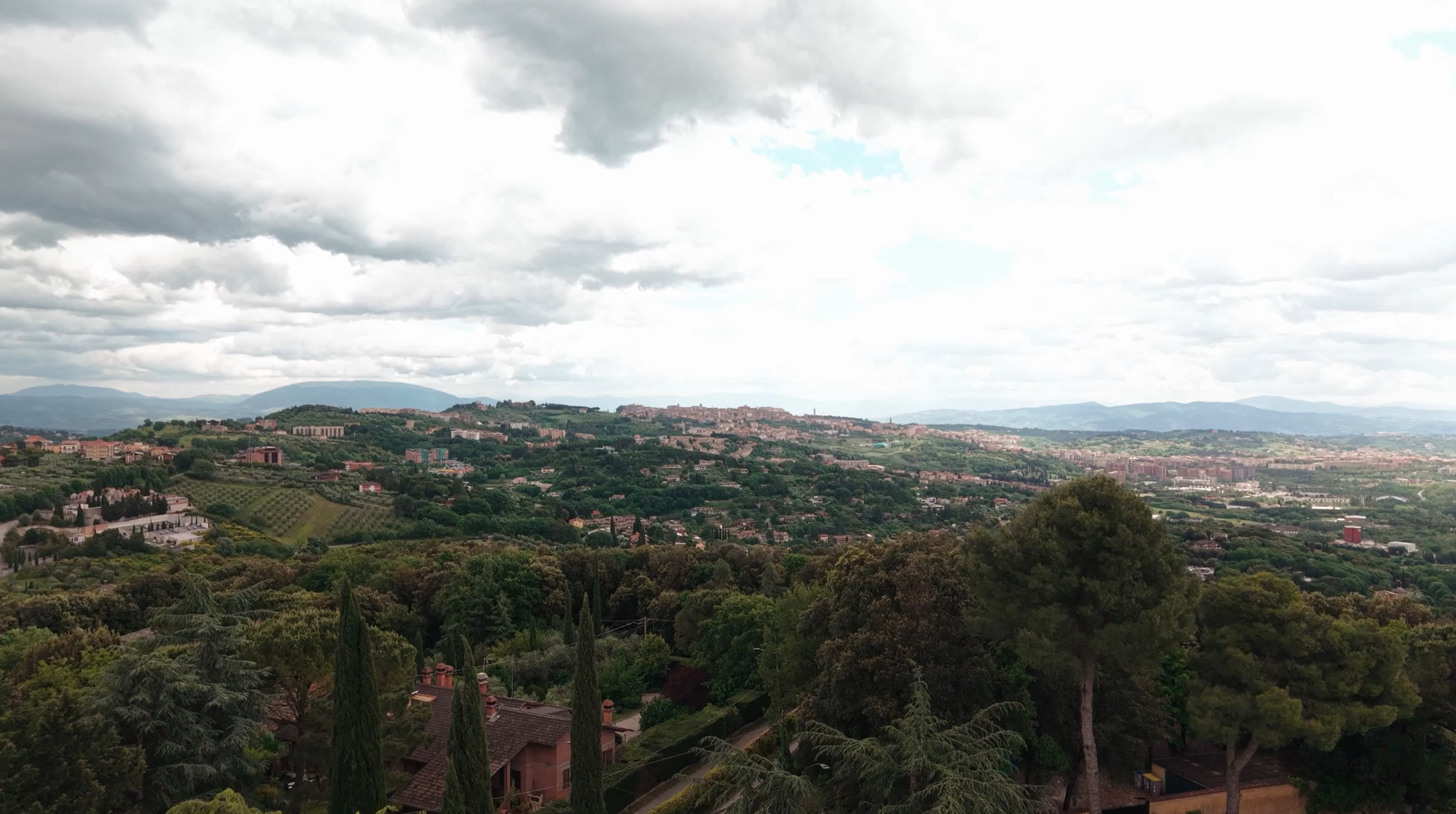
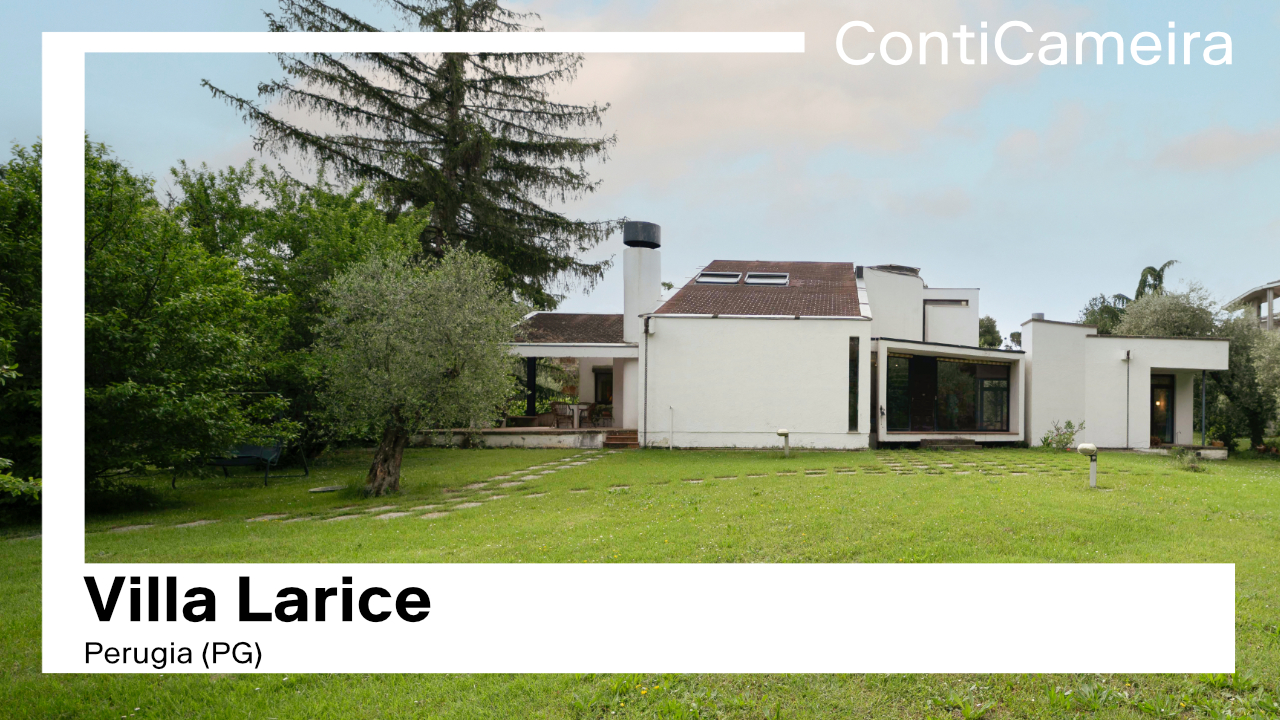
Just minutes from the center of Perugia, on the side of Monte Malbe facing San Marco and the city, this detached villa is situated in one of the area's most exclusive and tranquil residential settings. Surrounded only by nature, agricultural fields, the mountain forest, and an open panorama that offers a rare sense of freedom.
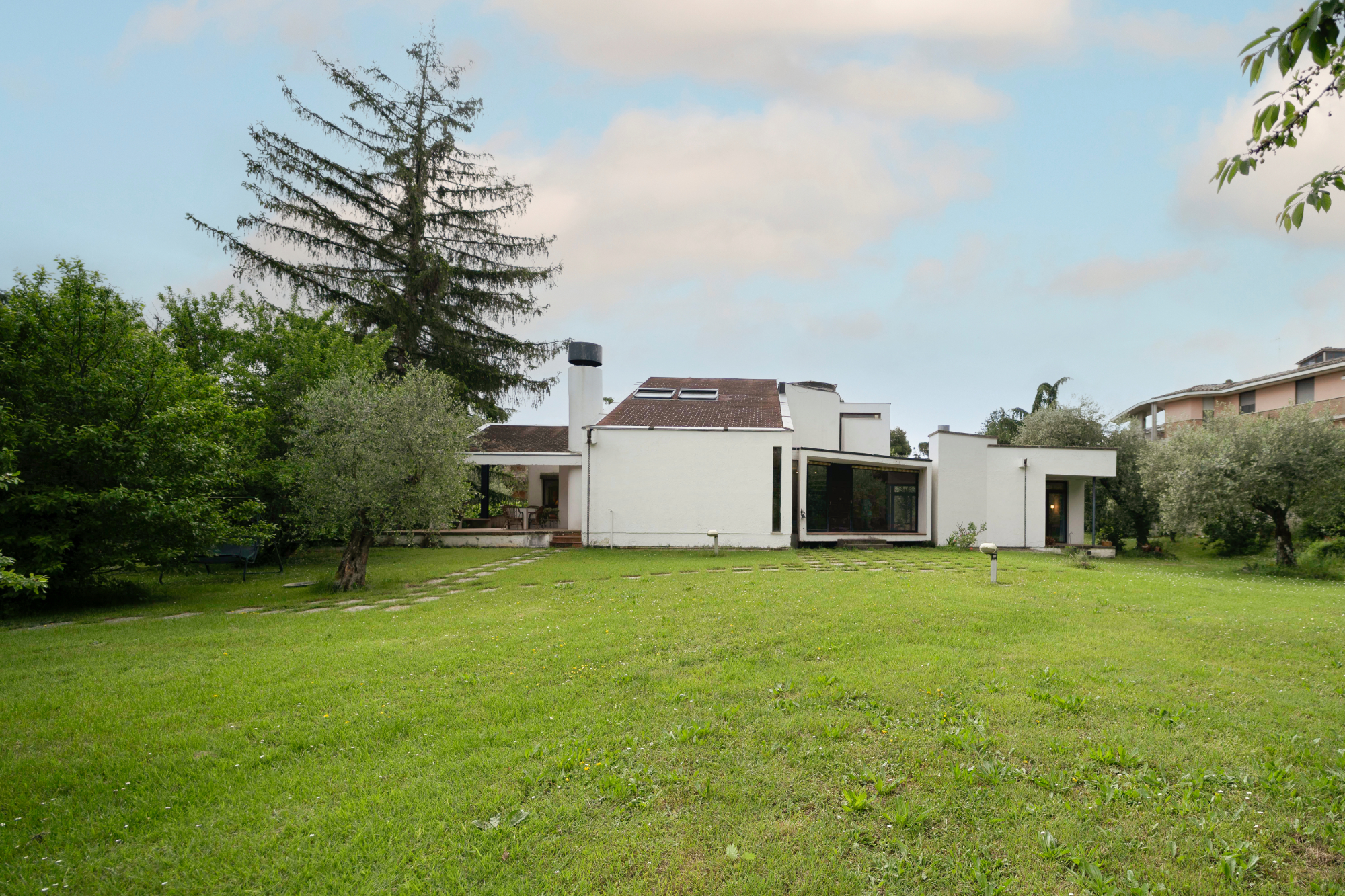
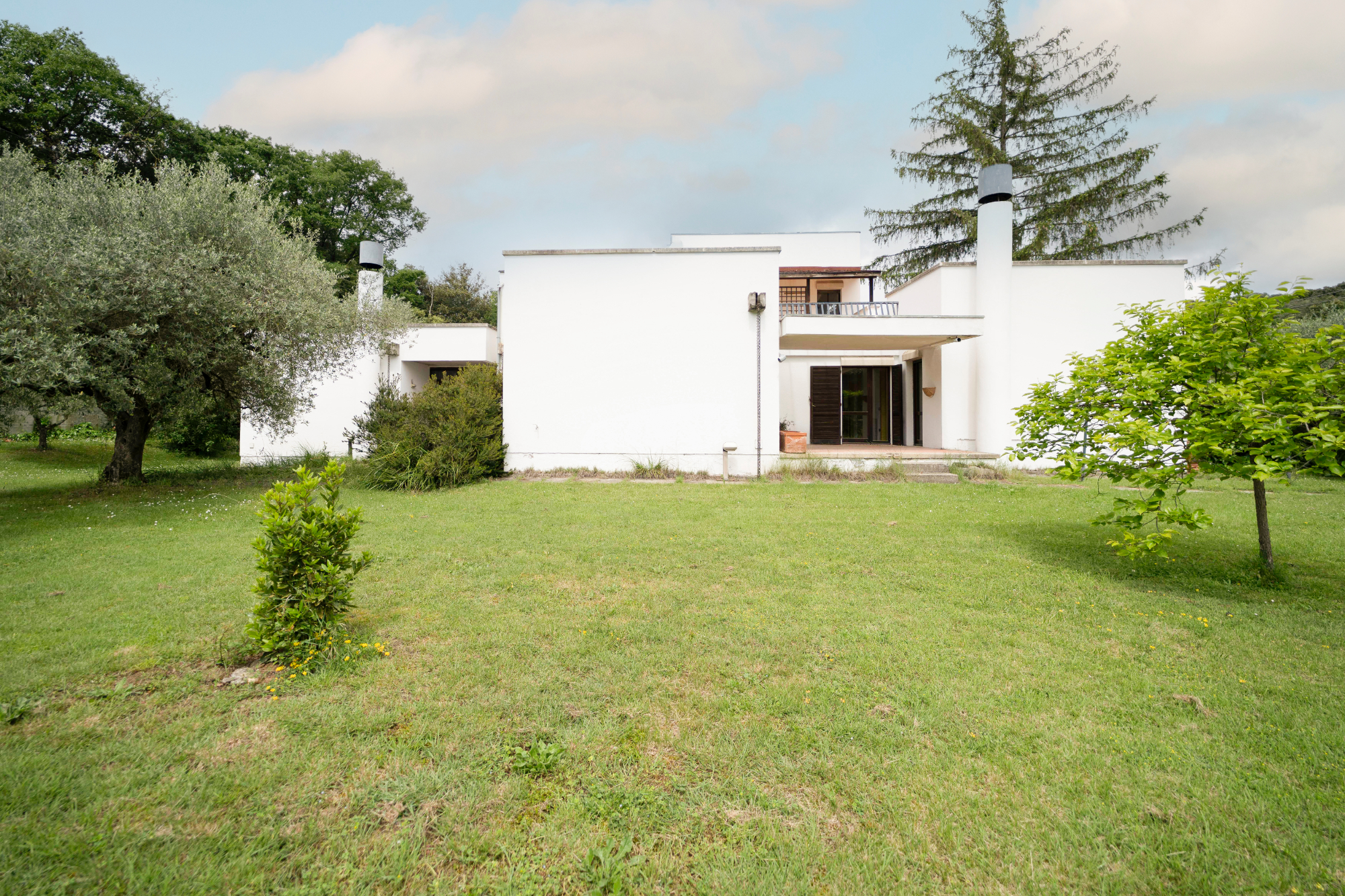
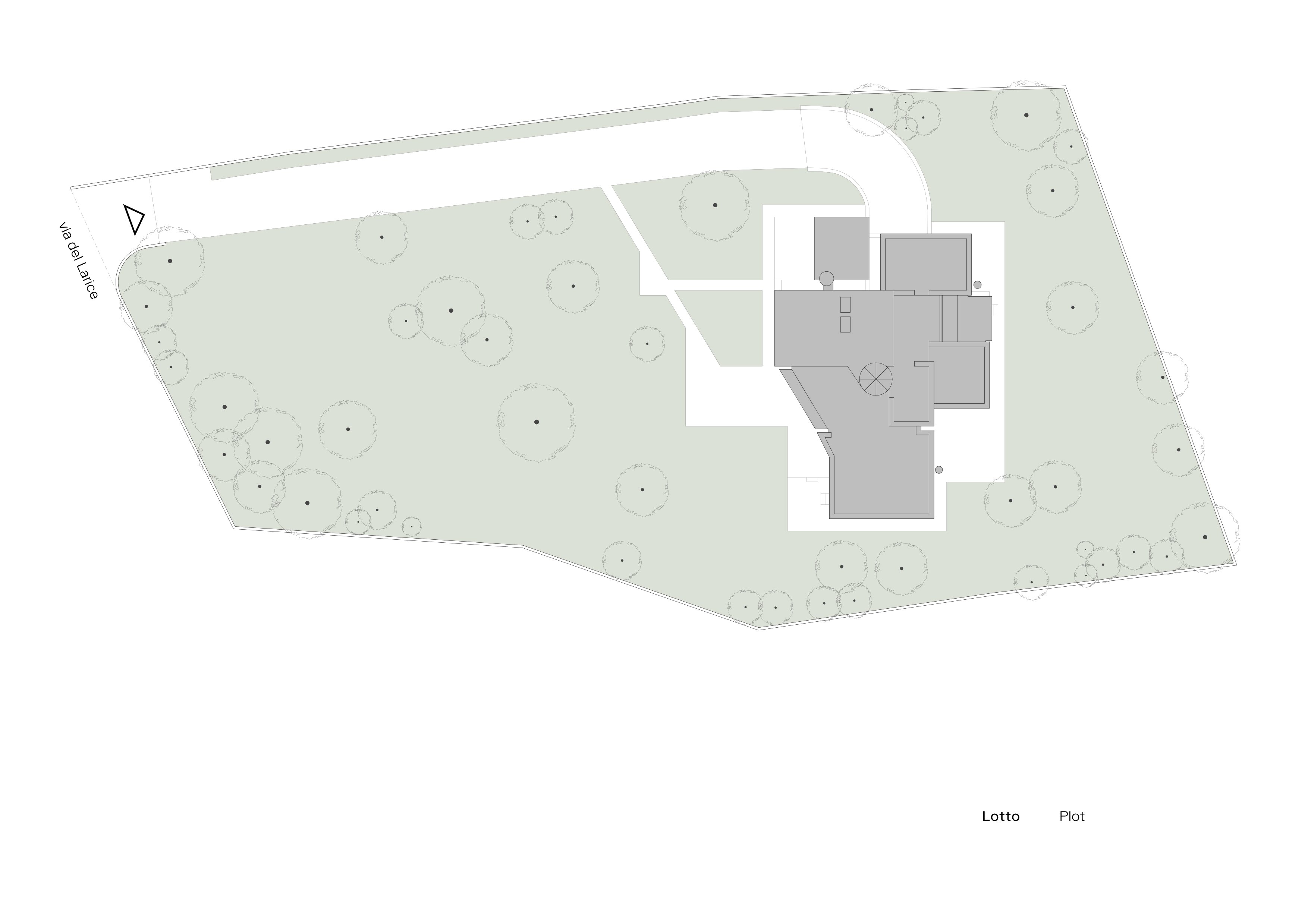
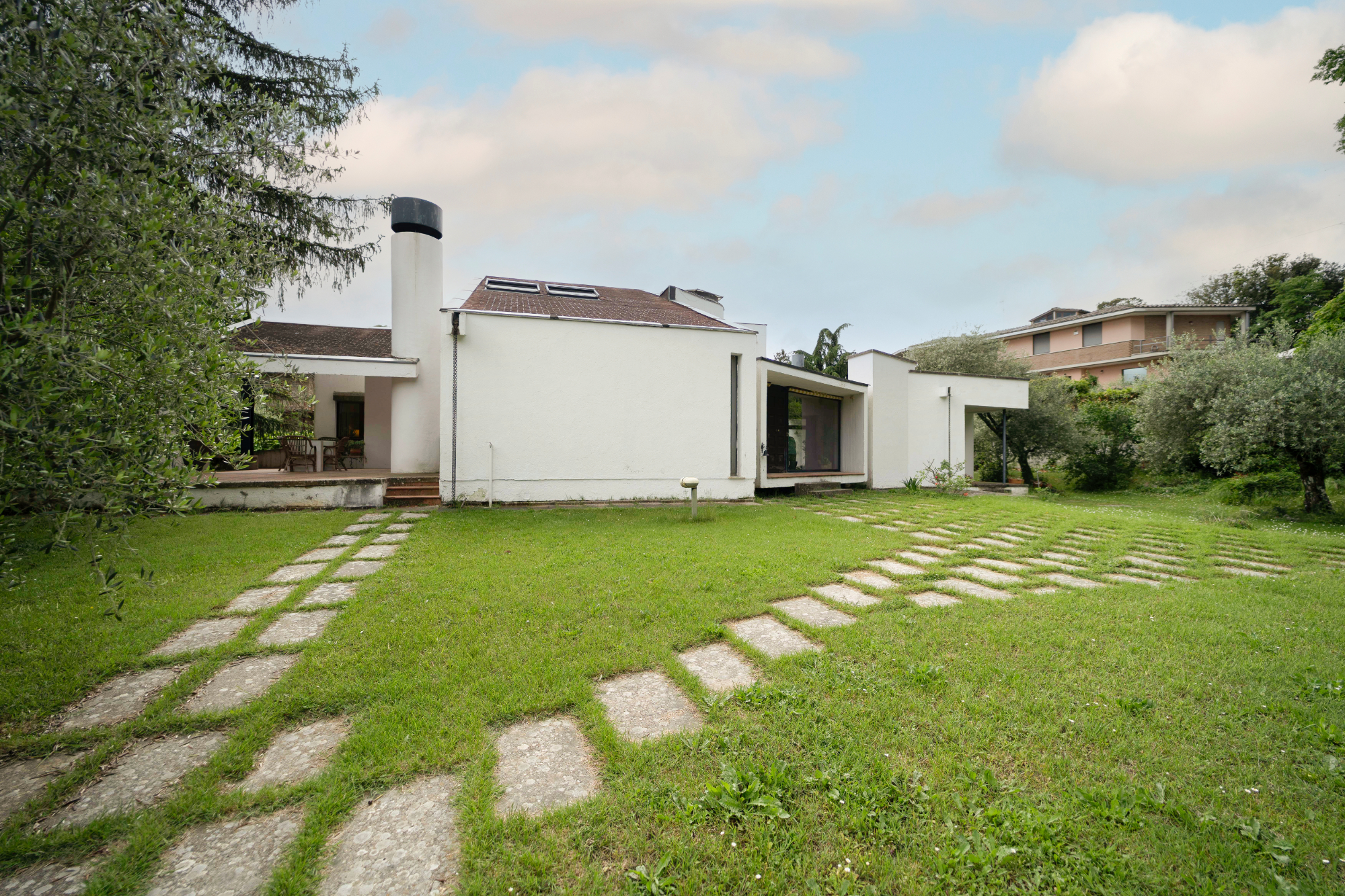
The property spans a completely flat plot of approximately 3,400 sqm: a virtually unparalleled feature in this hilly area. Access is directly from Via del Larice, in a setting of prestigious villas surrounded by greenery. The land, entirely covered by a well-maintained lawn, hosts mature trees, olive trees, and numerous varieties of fruit trees that punctuate the garden like a botanical constellation of scents, shadows, and colors that change with the seasons. Nothing is left to chance: the plantings were conceived in direct relation to the house's architecture, as an integral part of the composition.
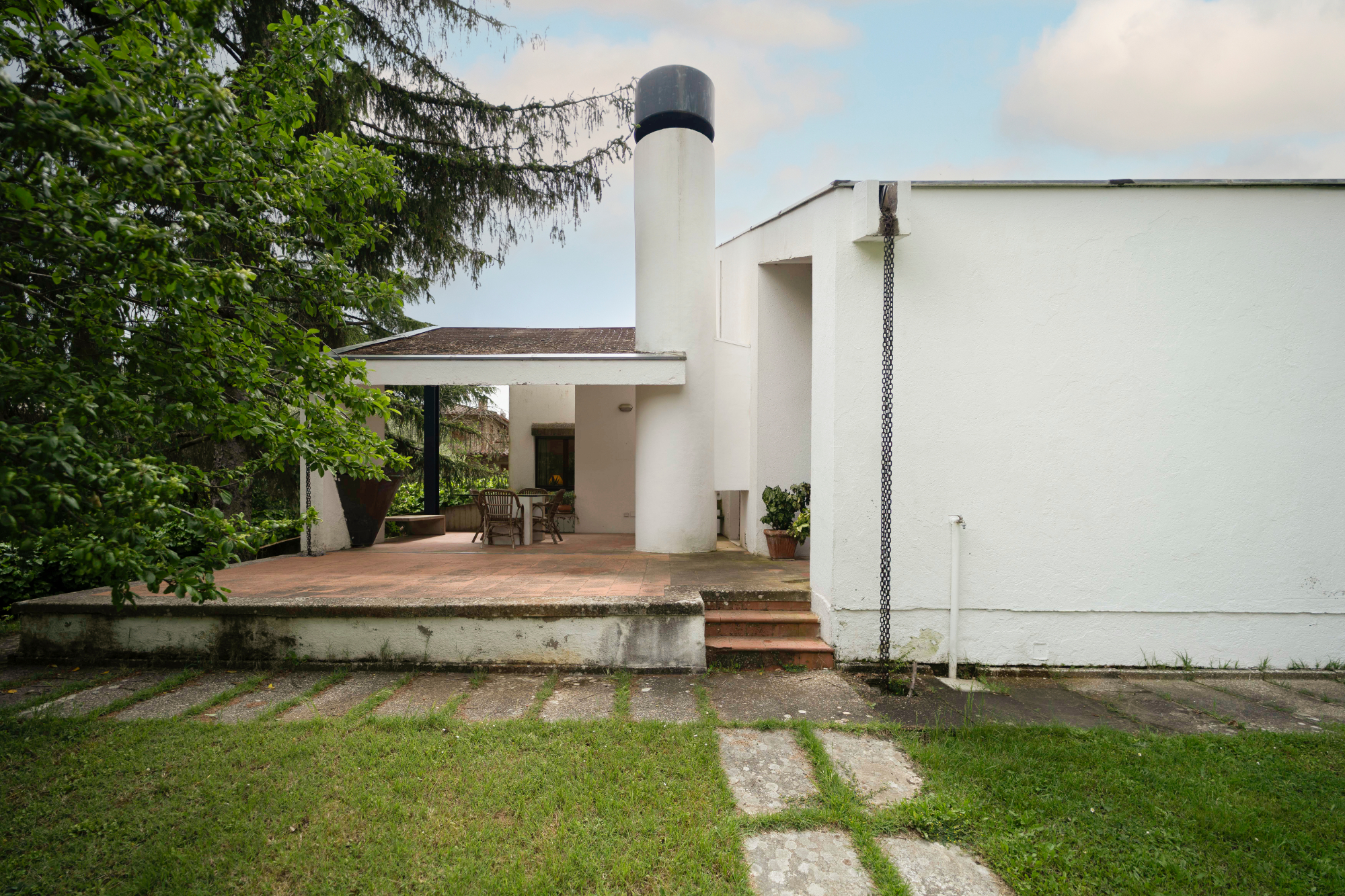
The building is deliberately positioned at the rear of the plot, away from the road, allowing the garden to take center stage and ensuring maximum privacy. The villa rests on the land according to the design by architect Roberto Luciano Vergoni and engineer Luciano Vagni, completed in 1978. A rare work not only for Perugia but for the entire region: an authentic testament to that era of Italian architecture capable of radically, positively, and experimentally interpreting the relationship between space, light, and living.
The house resembles a jazz score, an implicit homage to the city that has thrived on music and improvisation for decades, where the floor plan becomes an incessant rhythm of broken lines that intersect and generate a continuous sequence of spaces, perceptions, and emotional variations. The rooms are shaped by vertical, horizontal, and zenithal light cuts that punctuate the day, constantly transforming the domestic atmosphere. Internal heights range from 2.40 to 4.20 meters, almost as if symbolically inverting the figures, creating continuous spatial expansions and compressions. Each environment changes its relationship with its inhabitants and with the surrounding nature, framed like a series of ever-changing photographs.
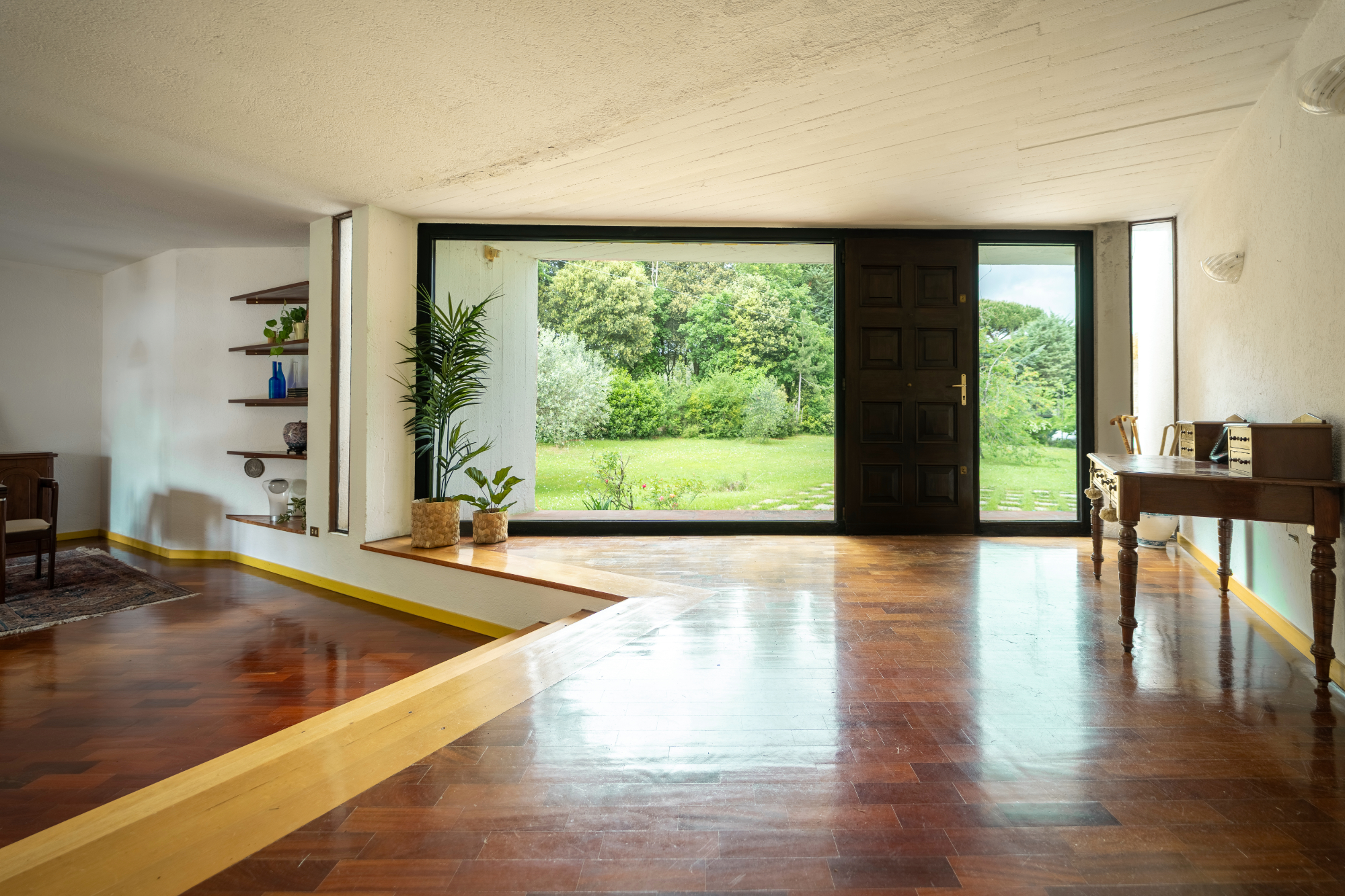
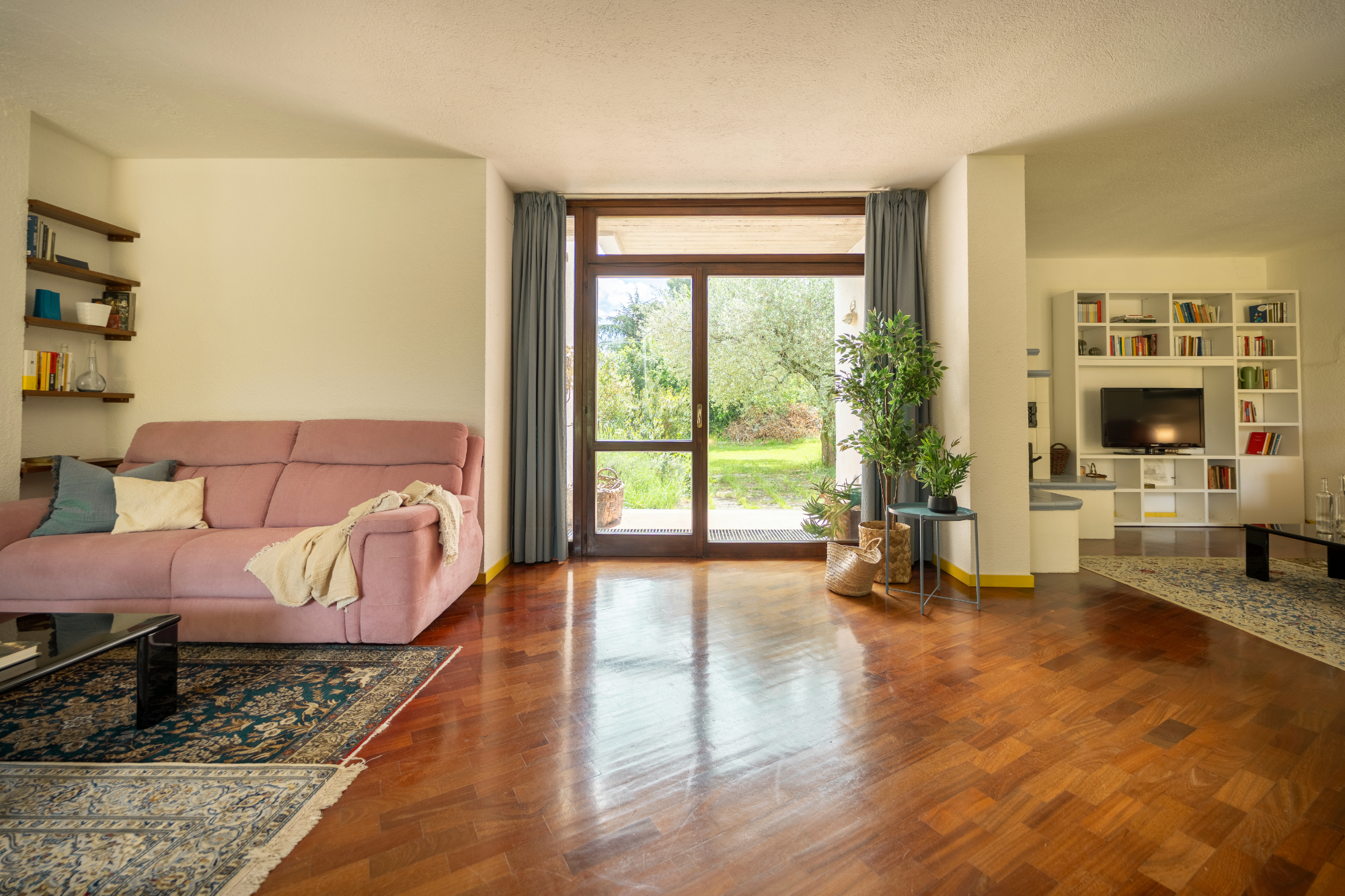
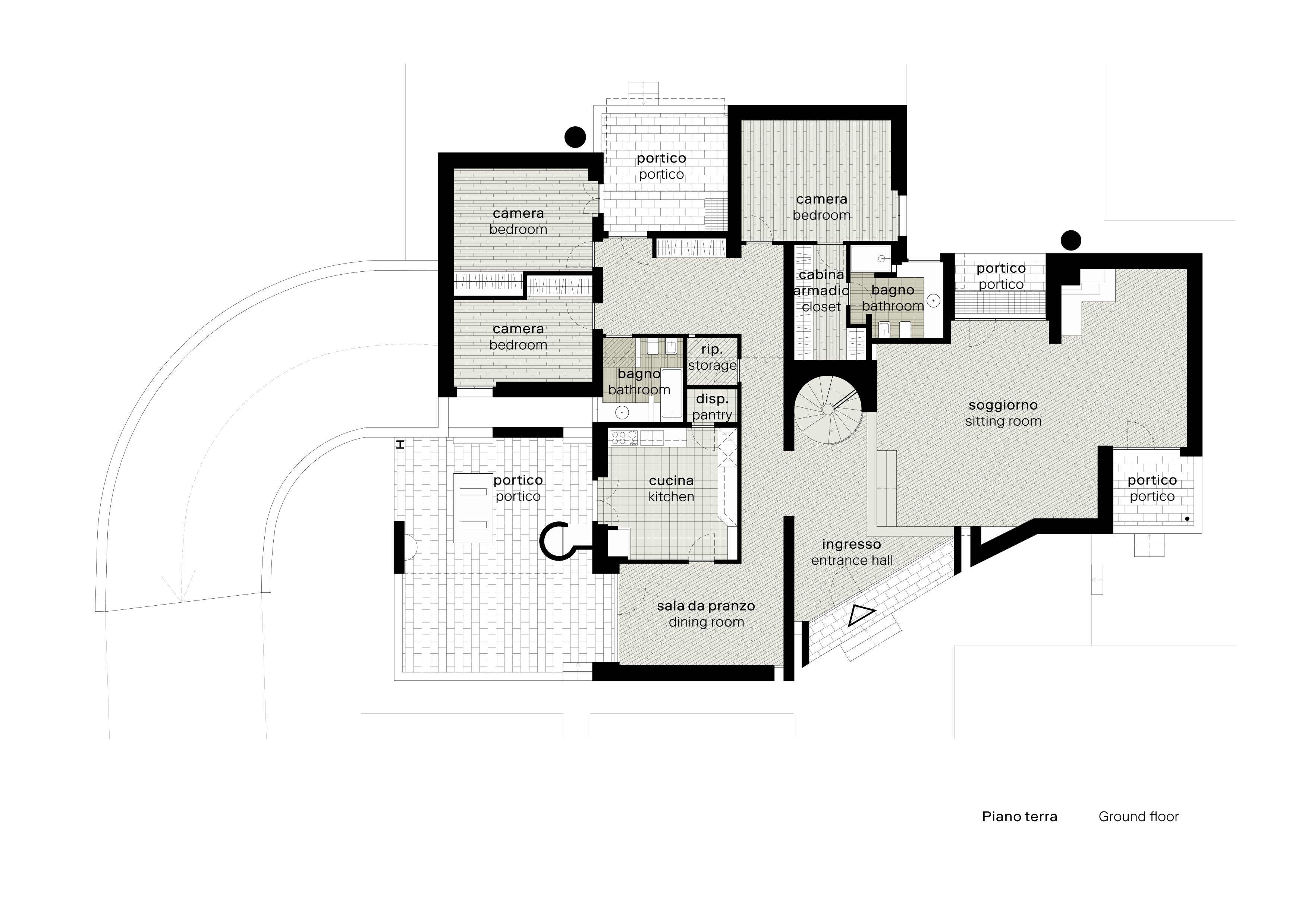
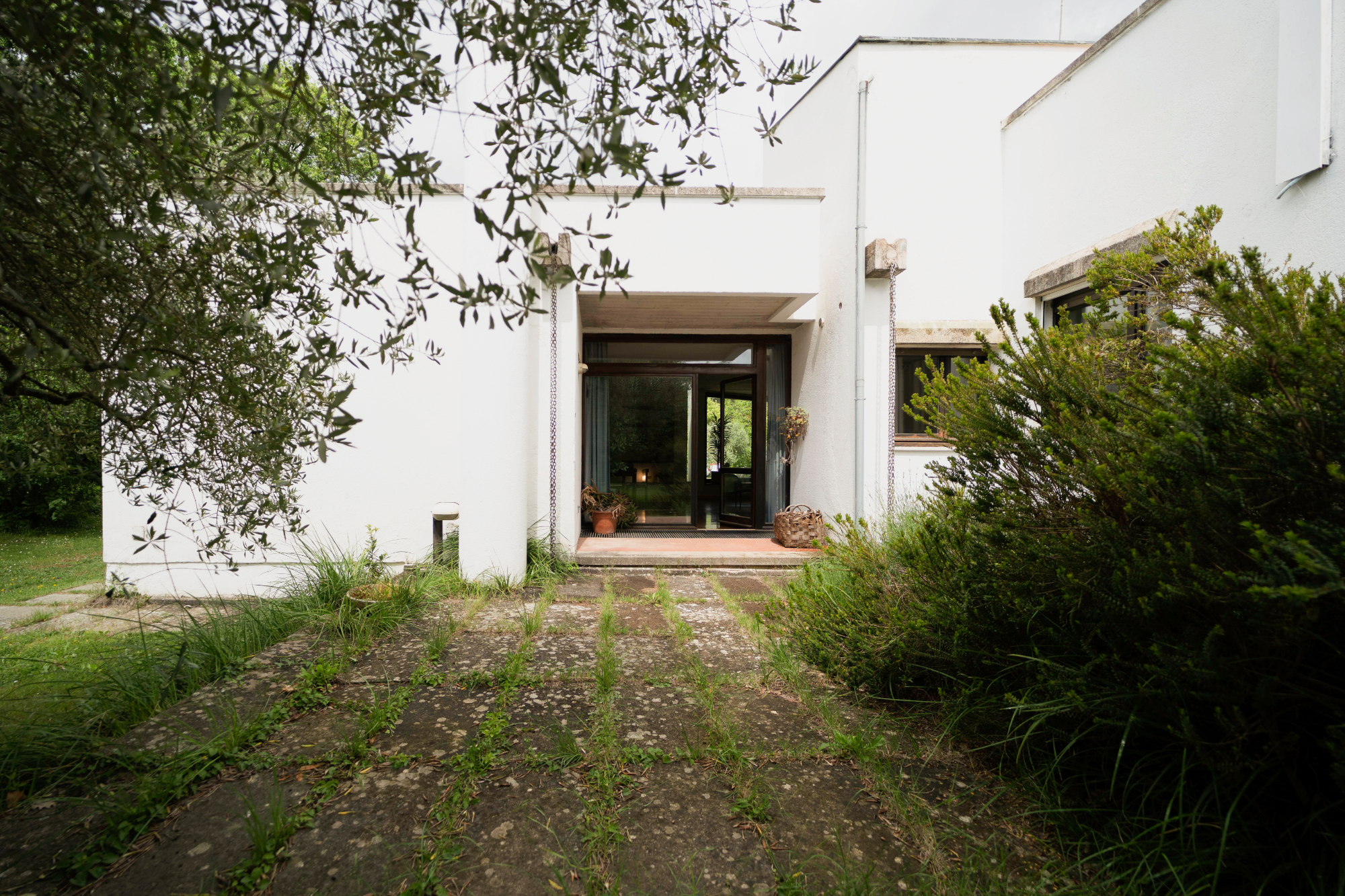
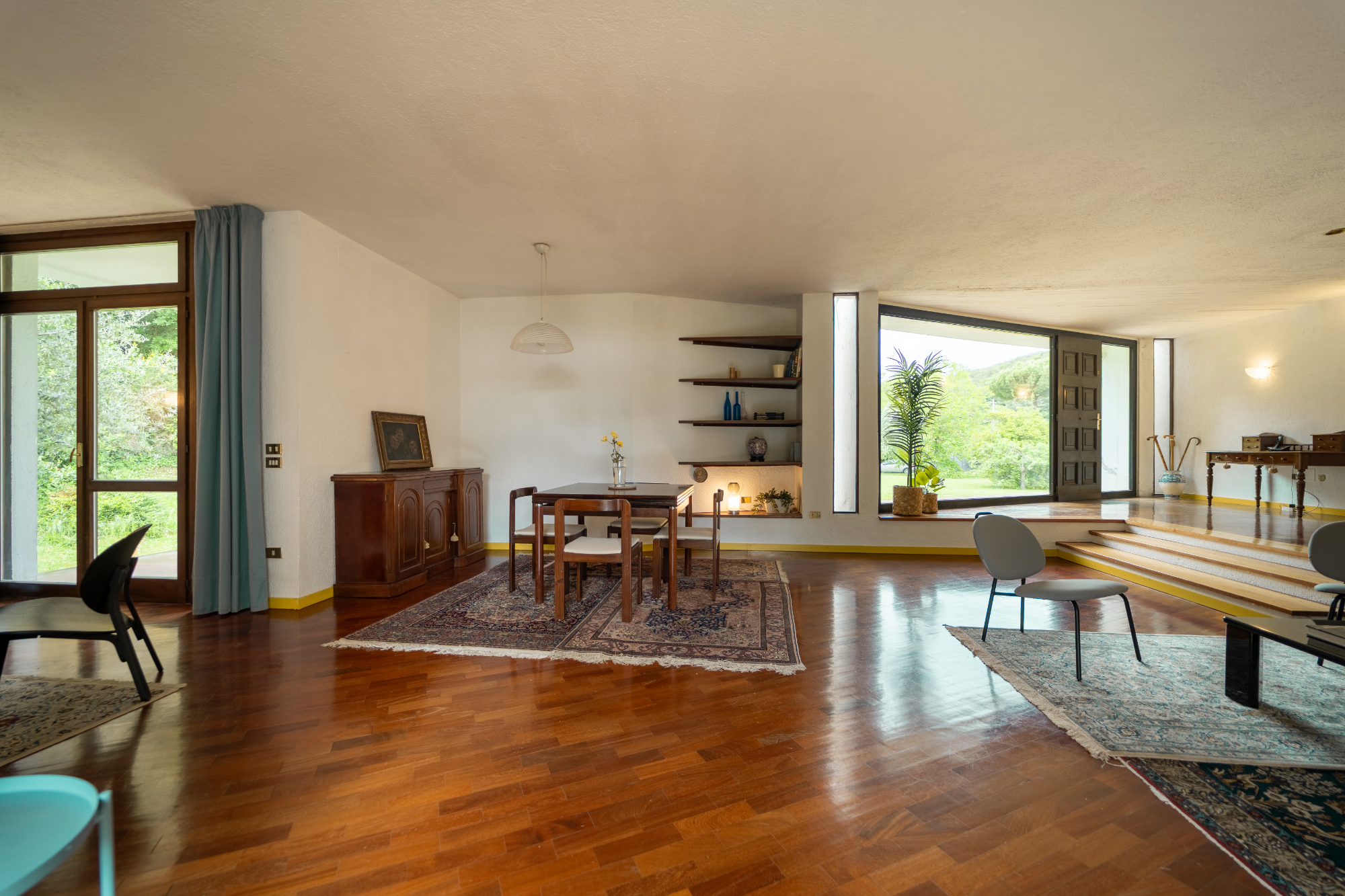
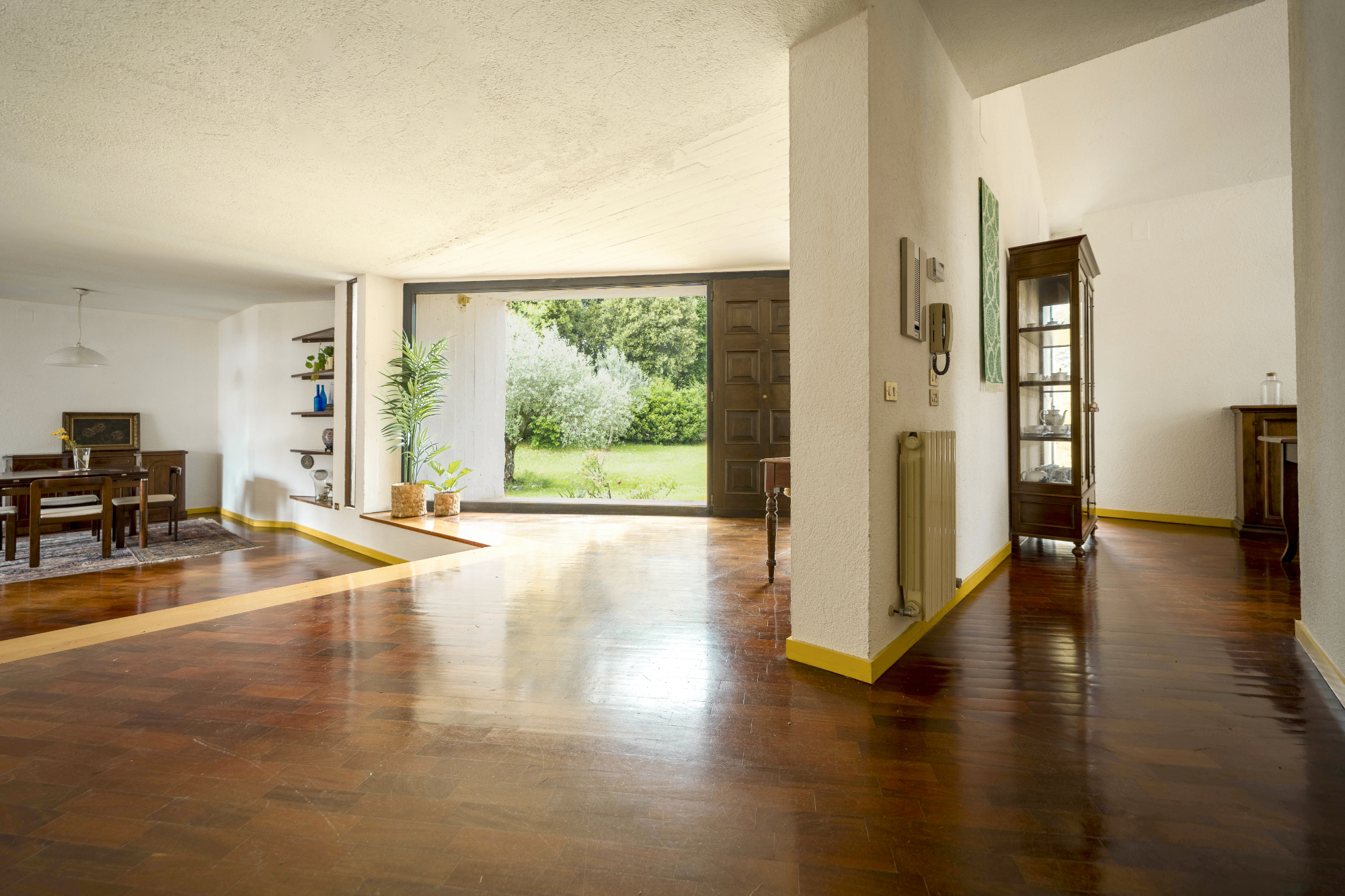
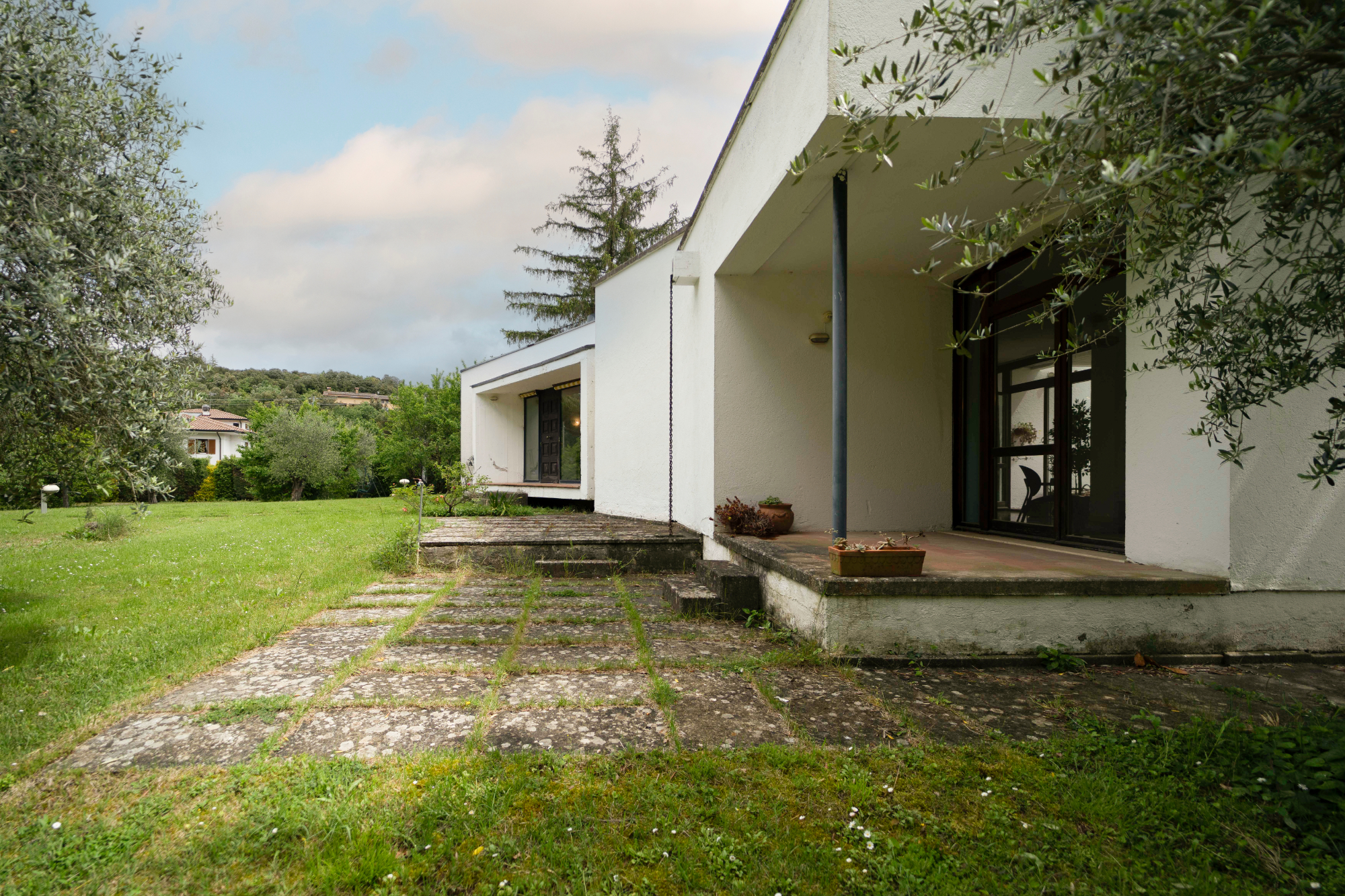
The villa does not present a main facade in the traditional sense of the term. It develops organically within the plot, without rigid compositional hierarchies, like a living organism that reveals itself gradually. Entry is through a suspended volume, raised three steps from the ground: a large glazed opening leads into the living room, the heart of the house, organized according to the principle of the Raumplan into a single, articulated, and fluid space.
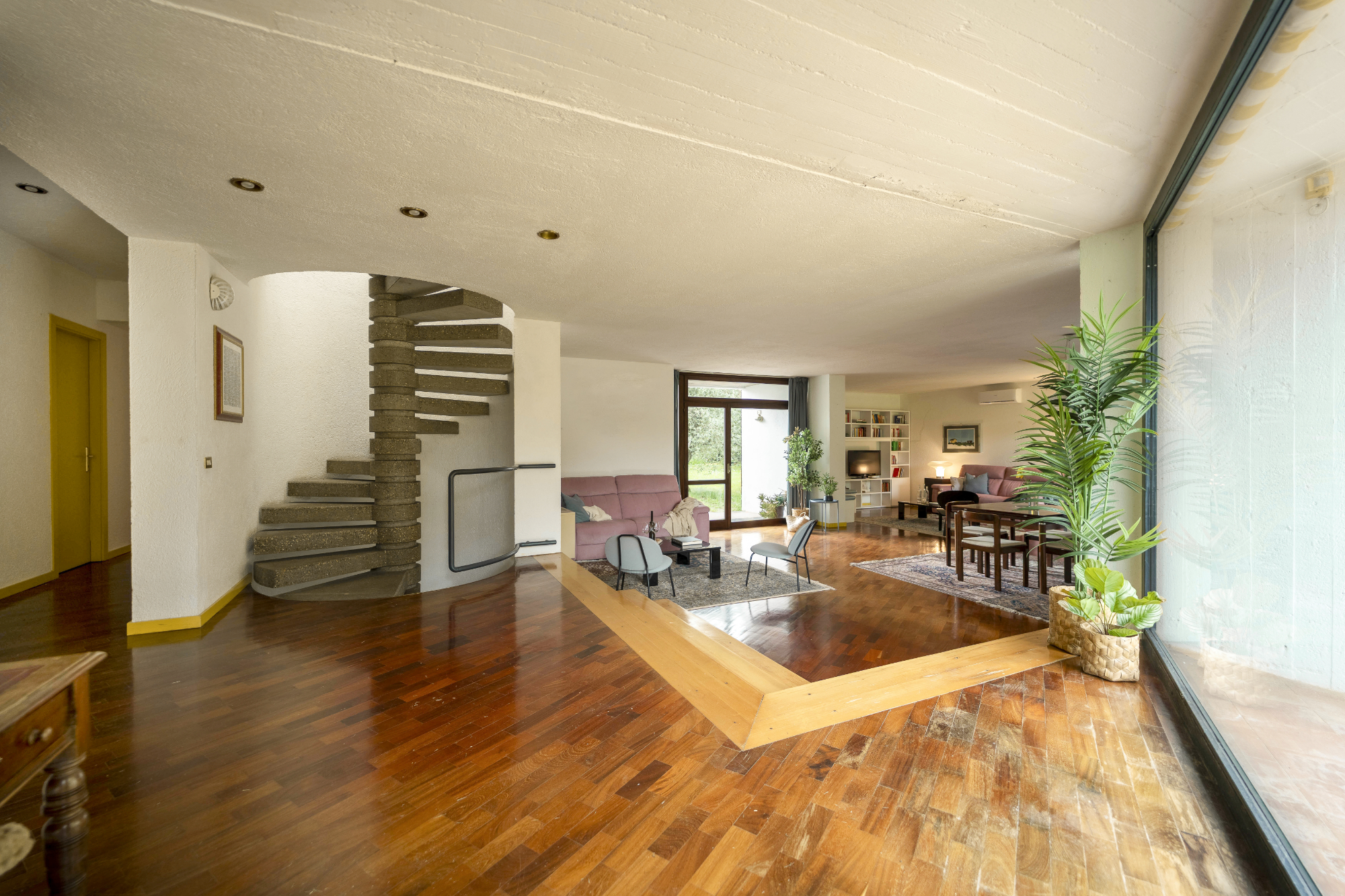
Here, natural light enters from three different sides, filtering through alternating covered porches that allow for outdoor living at any time of day and in any season. The space continuously changes: intimate and quiet in the morning, theatrical and vibrant at sunset. The living room is divided into four distinct areas—entrance, conversation, dining, and TV areas—united by an extraordinary spatial continuity.
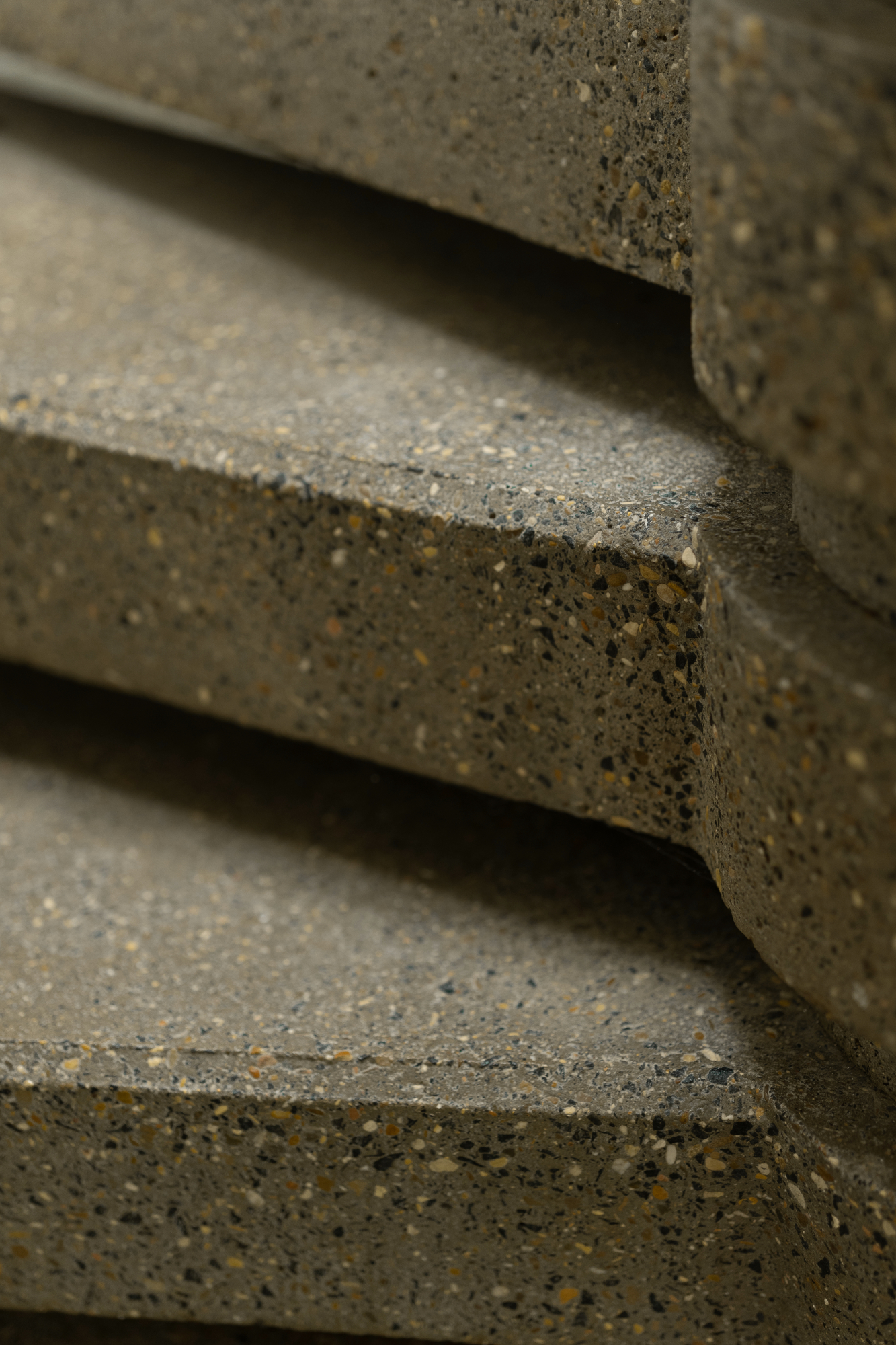
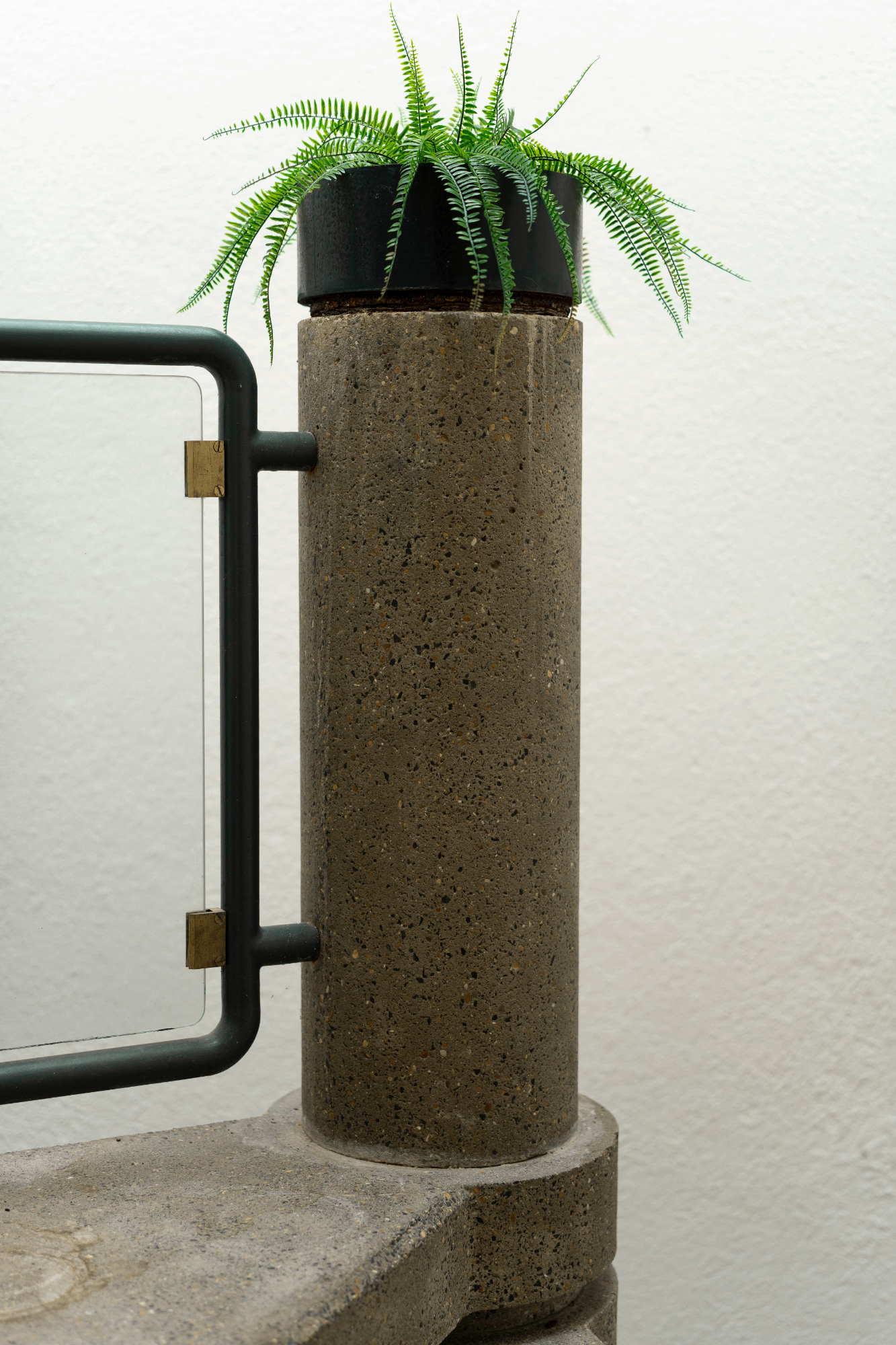
At the center of the composition emerges the staircase, the true backbone of the house. Made of precast concrete, it honestly displays each individual step as an autonomous element. A dark gray brutalist gesture that stands out against the neutral white interiors, illuminated from above by the zenithal light of the skylight.
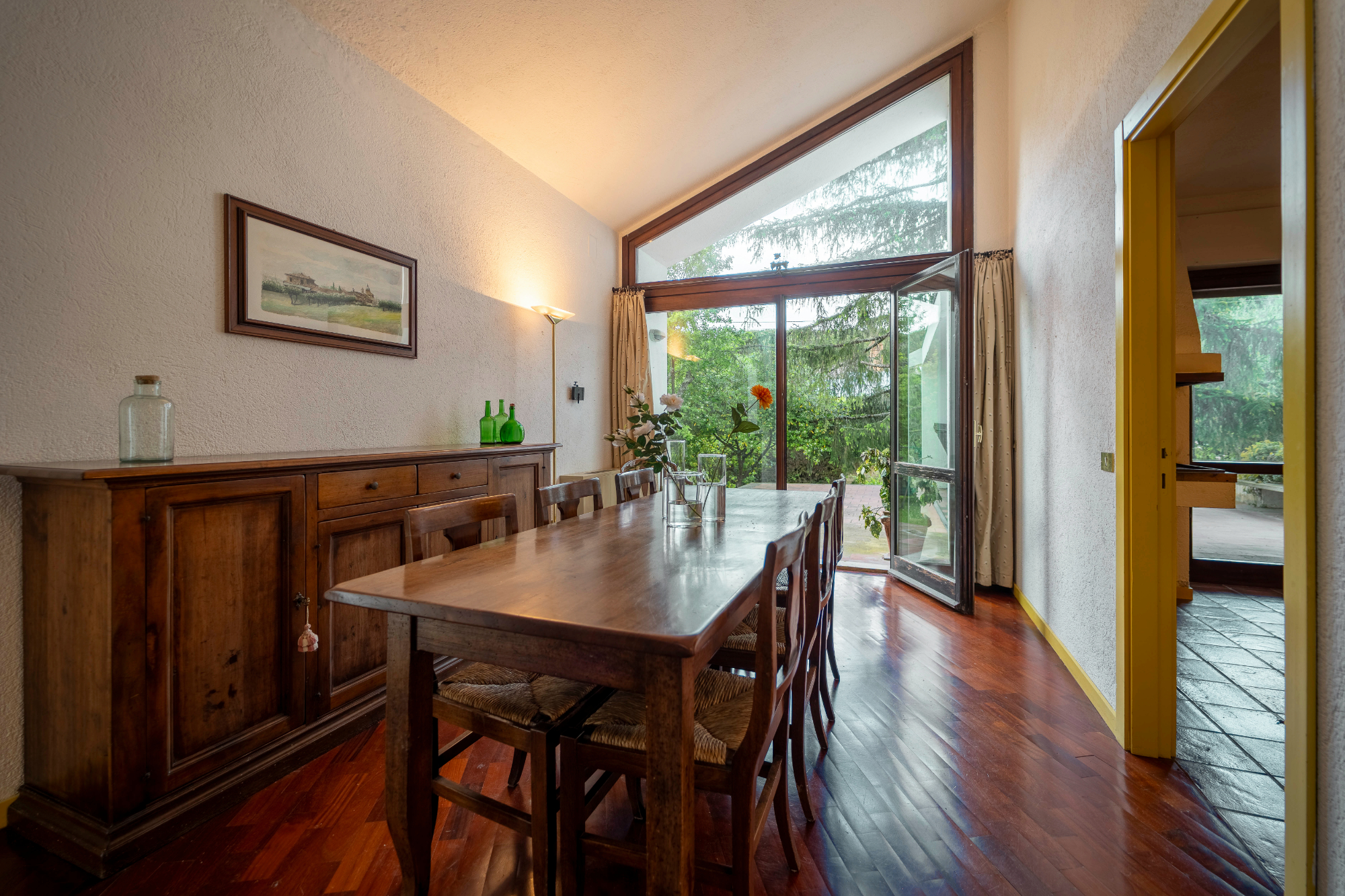
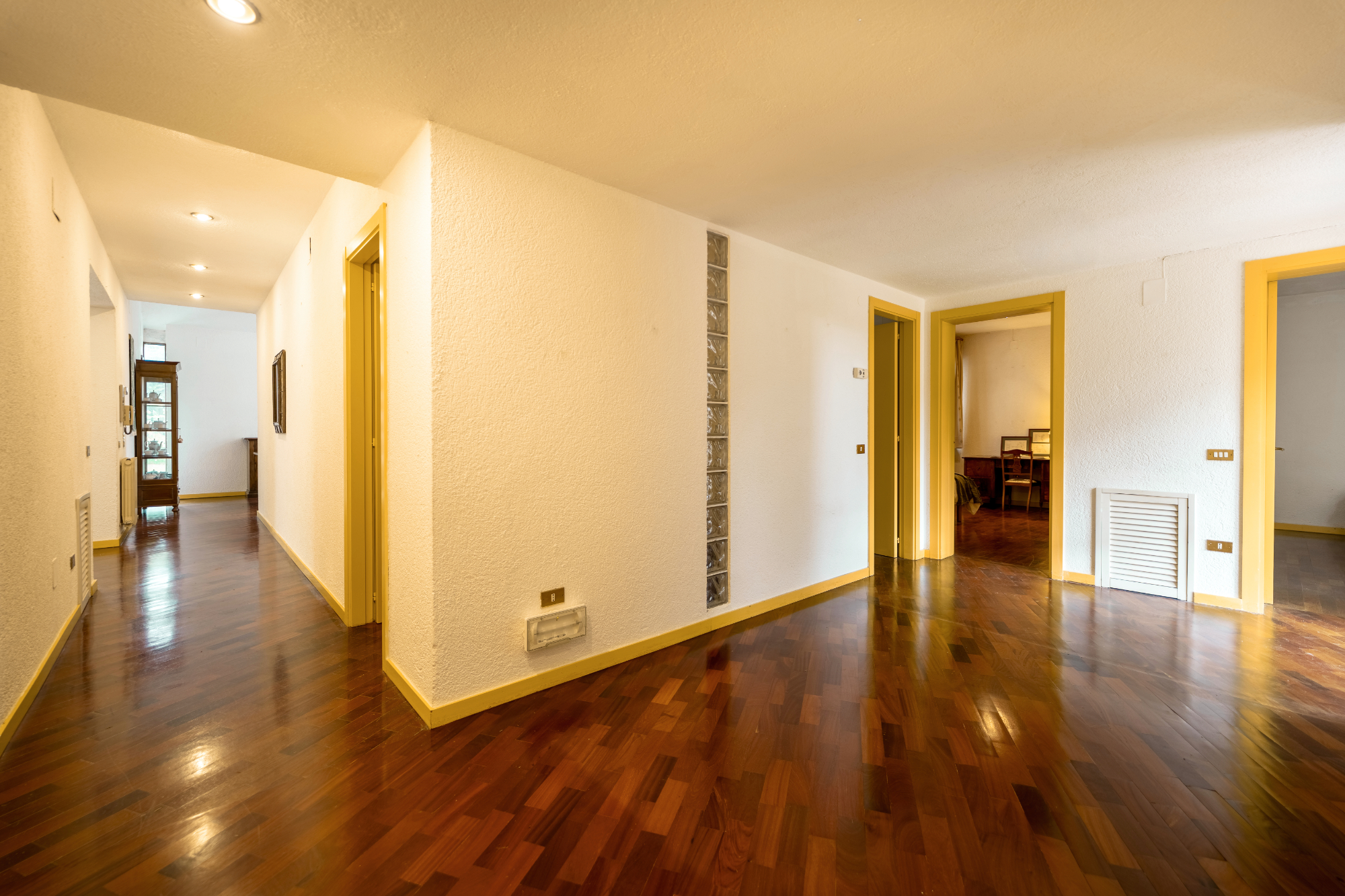
The distribution of rooms is structured through a refined interplay of paths and offsets. An articulated corridor replaces traditional doors and becomes an element of acoustic and light separation between spaces. Turning towards the dining area, the architecture suddenly explodes into a surprising asymmetrical verticality that frames the terrace and, in the background, the silhouette of a large evergreen pine. The gaze is naturally drawn upwards by the light cuts and the tension of the volumes.
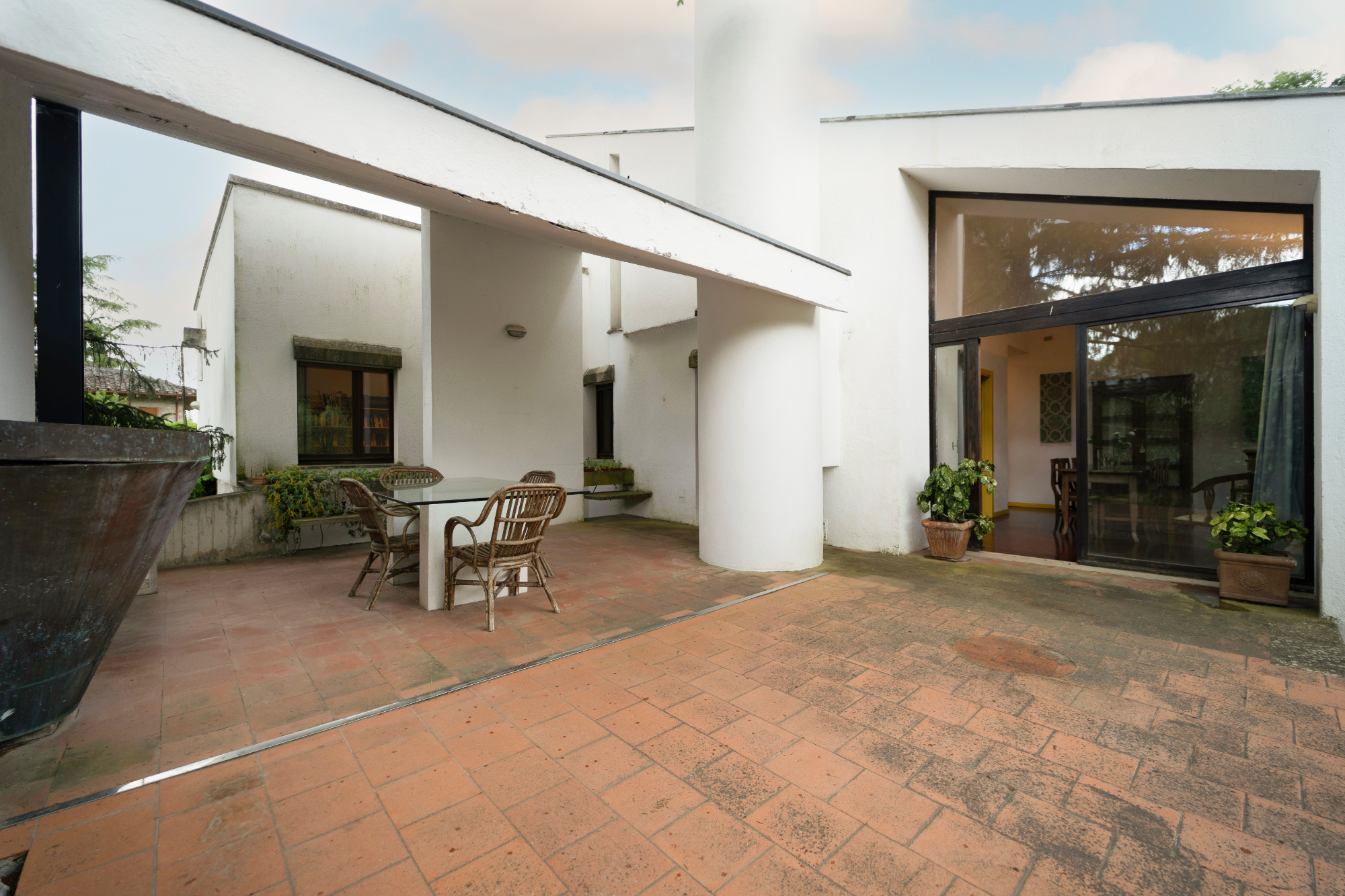
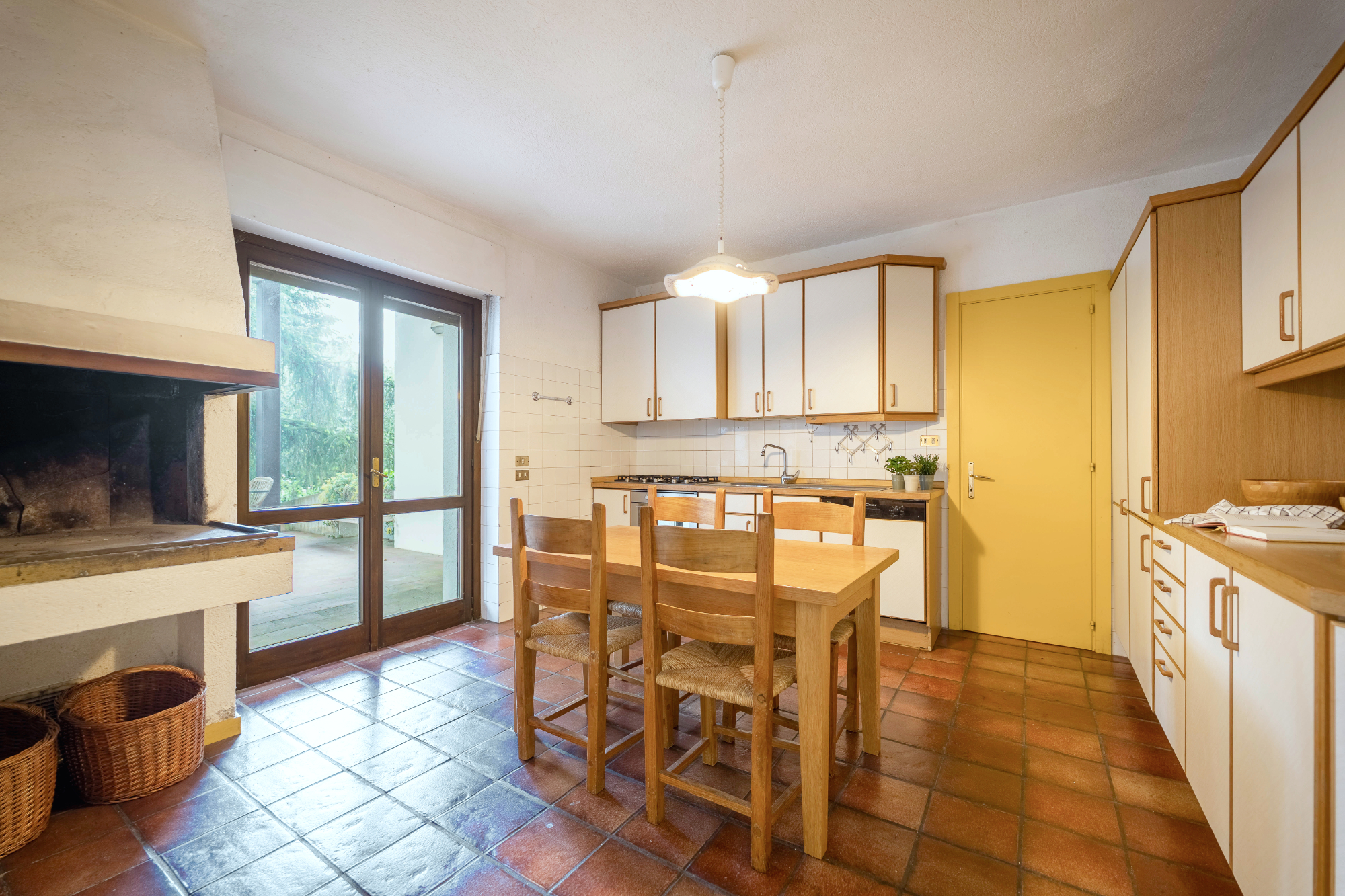
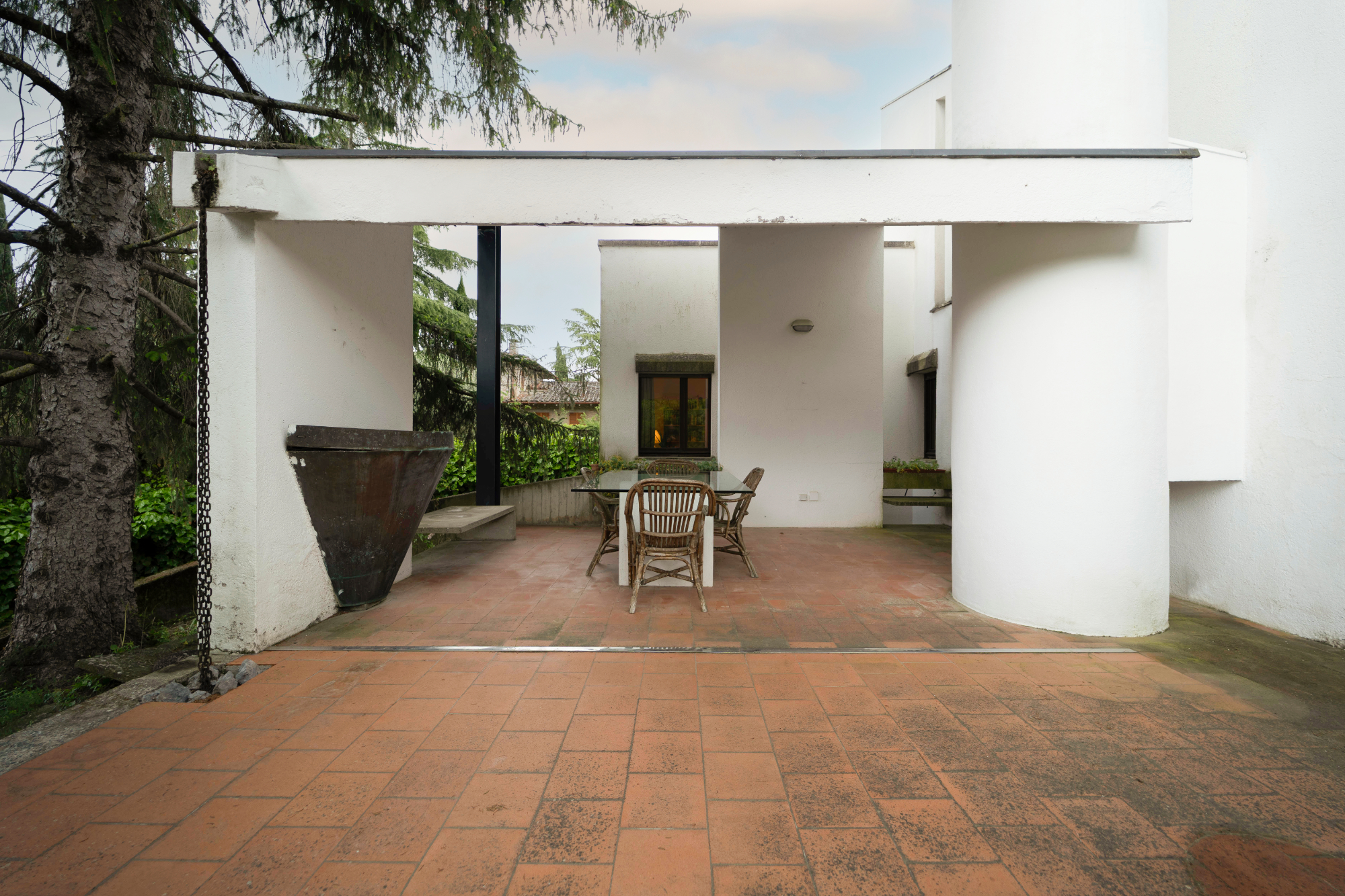
The kitchen, directly connected to the dining room, is organized on two sides with central space for a table or island. Here, a fireplace dedicated to cooking and conviviality transforms autumn evenings into an intimate and homely experience. From the kitchen, there is access to the north-facing covered porch: a large, cool, and protected space, designed for outdoor summer living, enriched by horizontal architectural elements such as integrated seating and the vertical volume of the fireplace.
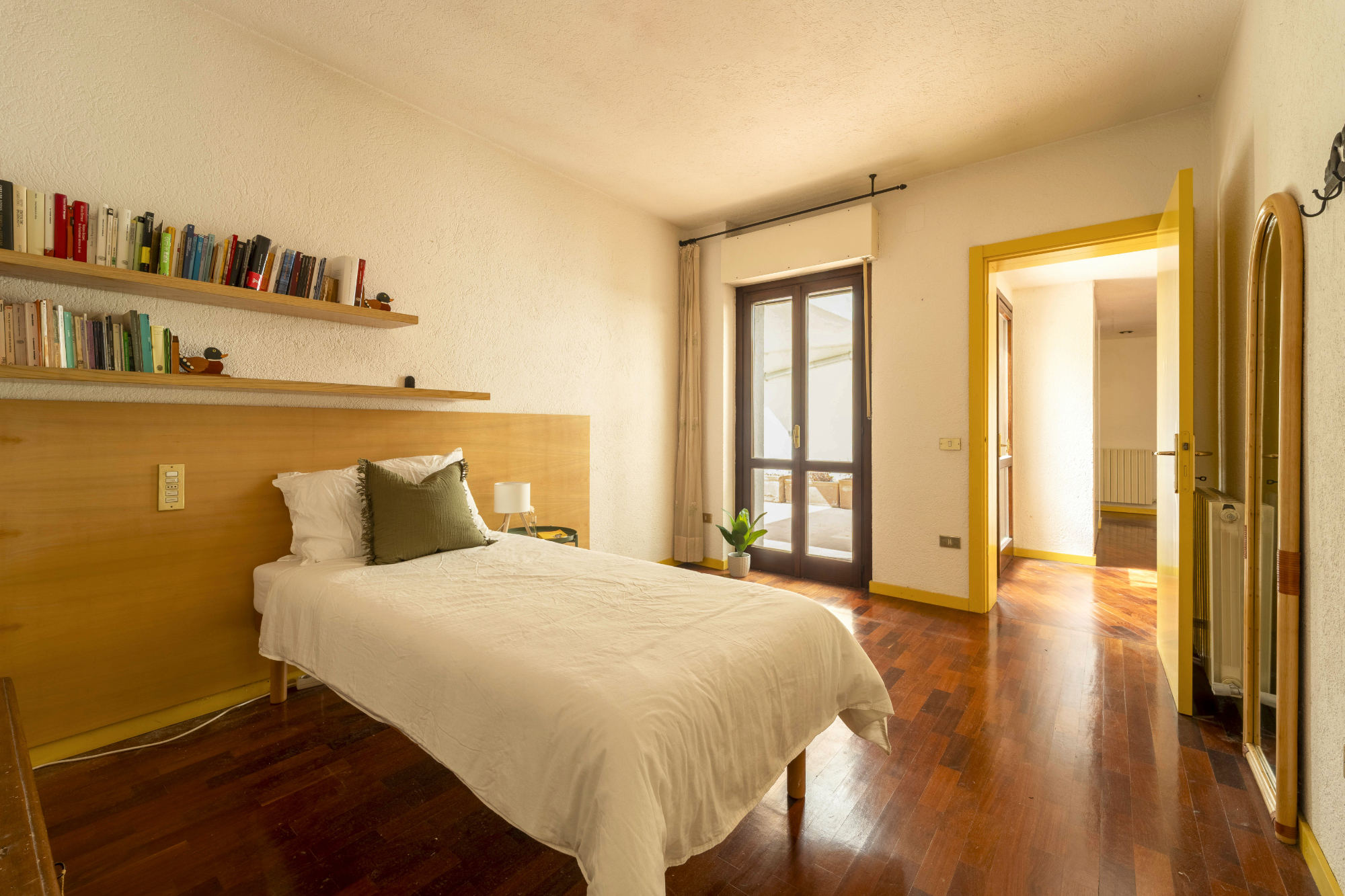
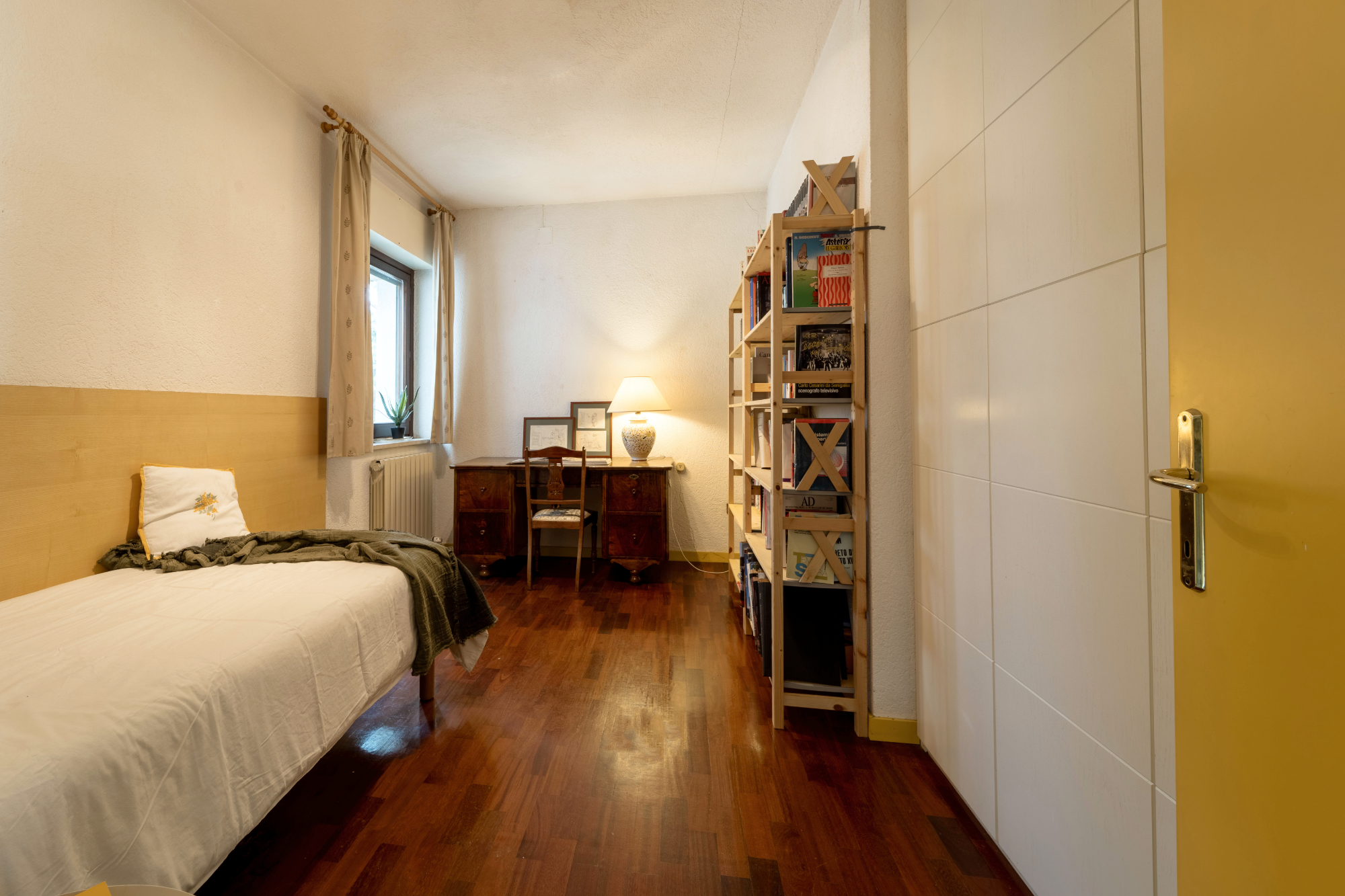
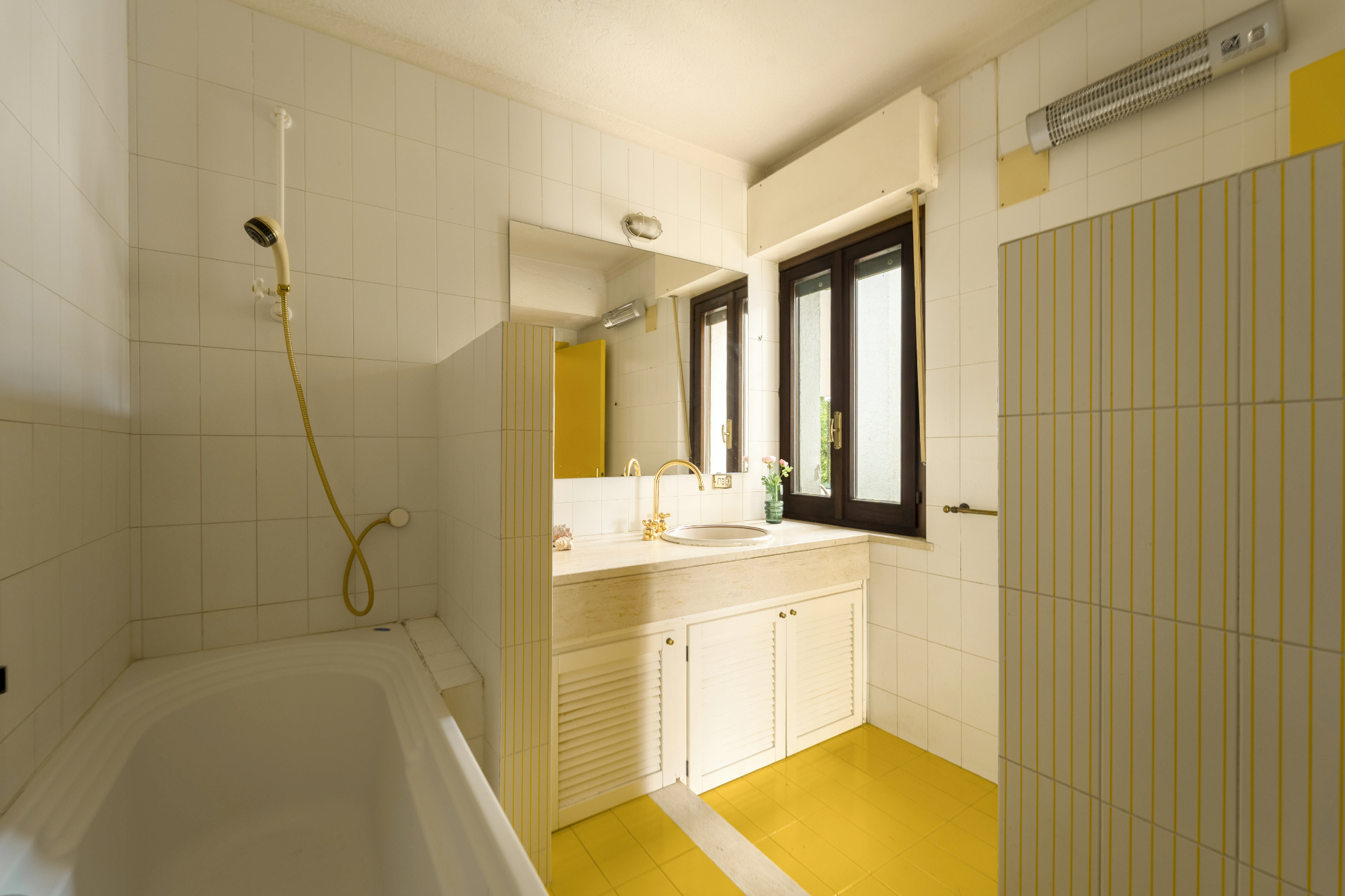
Proceeding towards the sleeping area, the ceilings lower and the spaces become more intimate, naturally guiding towards a private and protective dimension. The heart of this part of the house is an expanded space overlooking a more intimate covered porch, ideal as a study, play area, or meeting place. From here, there is access to the shared bathroom, a storage room easily convertible into a guest powder room, and two children's bedrooms, one double and one single, both designed to integrate a bookshelf, desk, wardrobes, and bed.
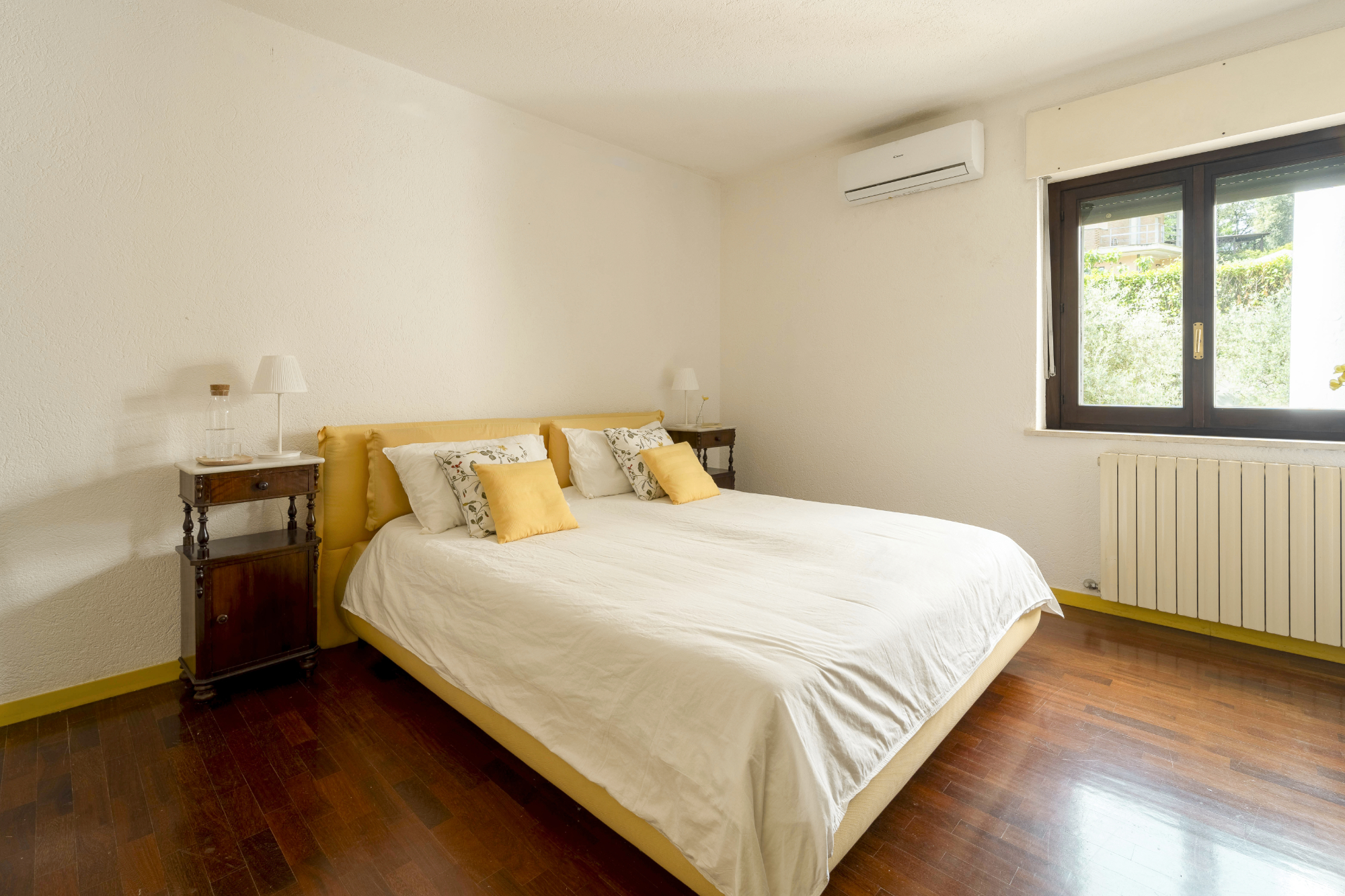
On the opposite side, completely separate and without shared walls with the children's area, the master suite ensures maximum privacy. A space comprising a bedroom, walk-in closet, and en-suite bathroom, conceived as a quiet retreat surrounded by greenery.
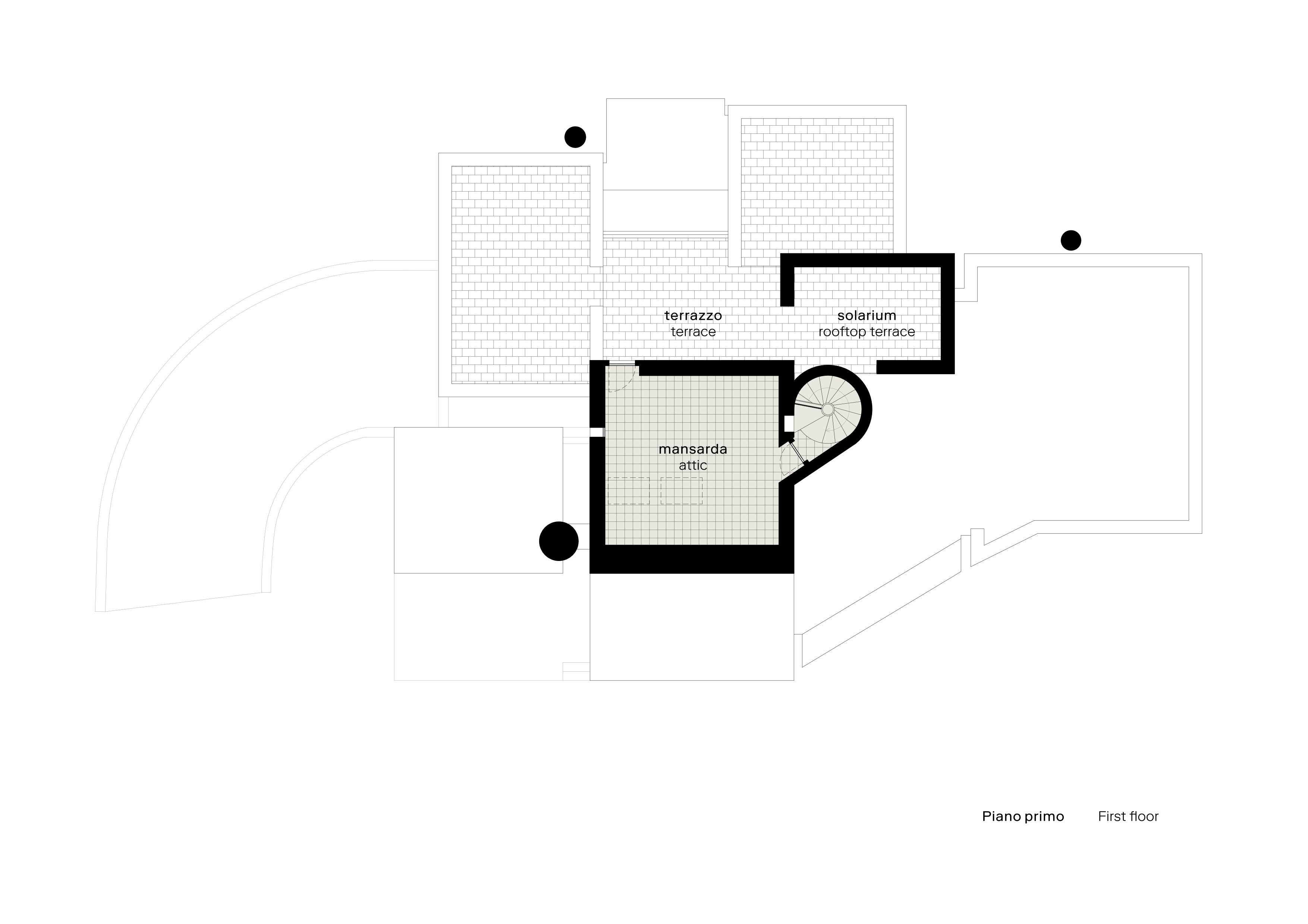
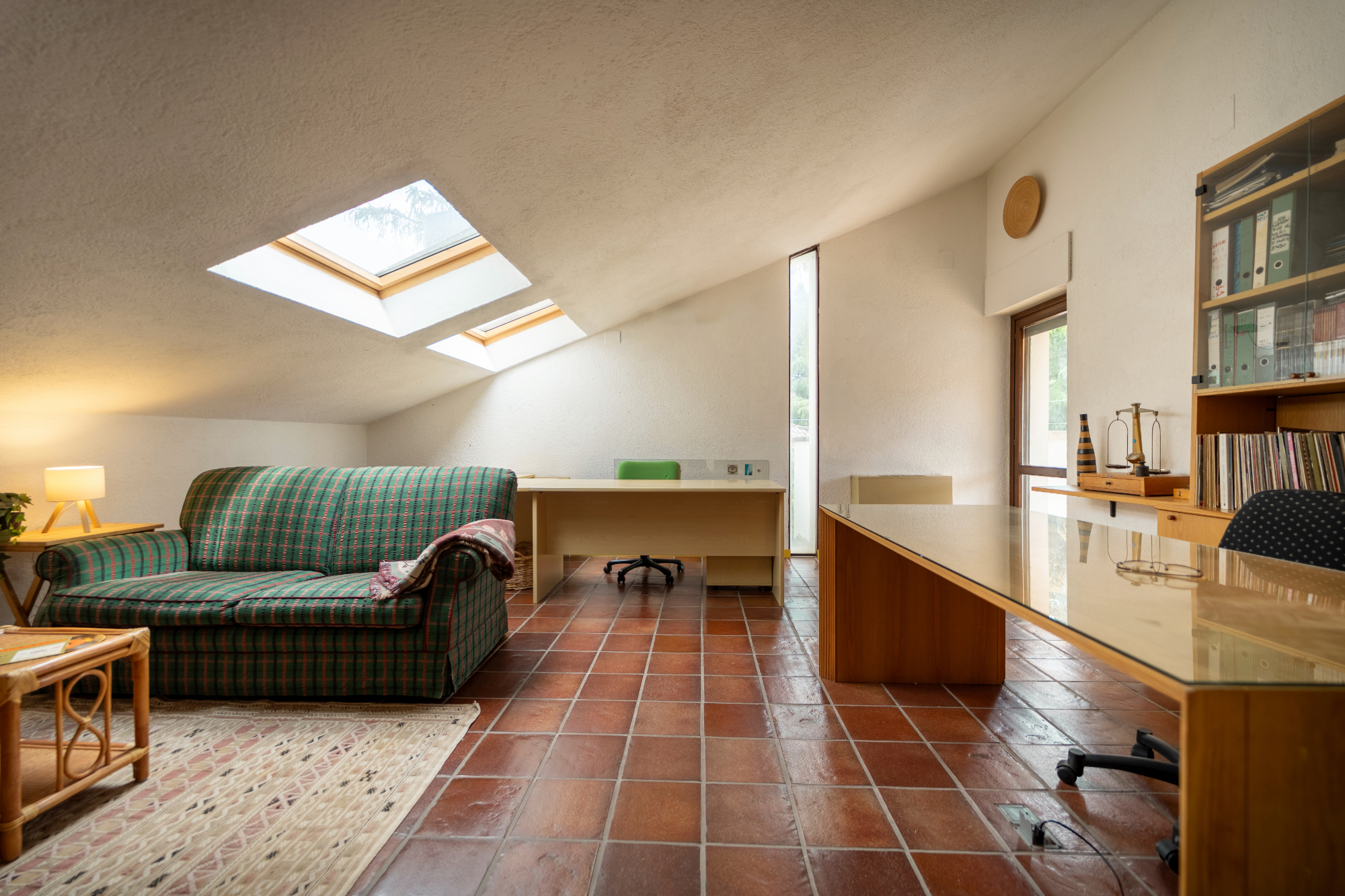
On the first floor, there is a loft of approximately 30 sqm, bright and dynamic, illuminated by vertical openings, a French door, and Velux windows. A versatile space, ideal as a creative studio, guest bedroom, or second living area, with the possibility of creating an additional guest bathroom. The French door leads to a south-facing sun terrace with open views of Perugia.
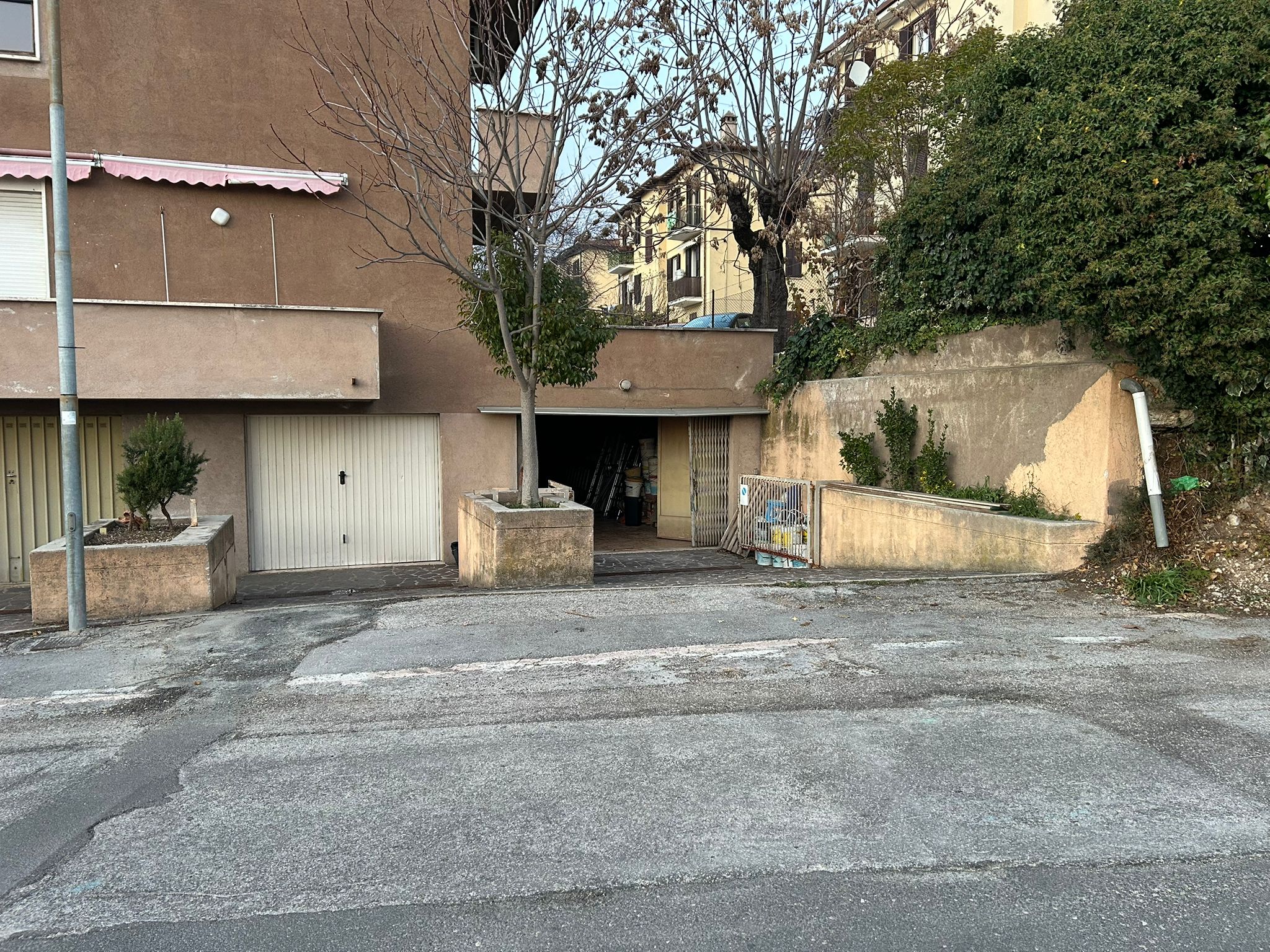
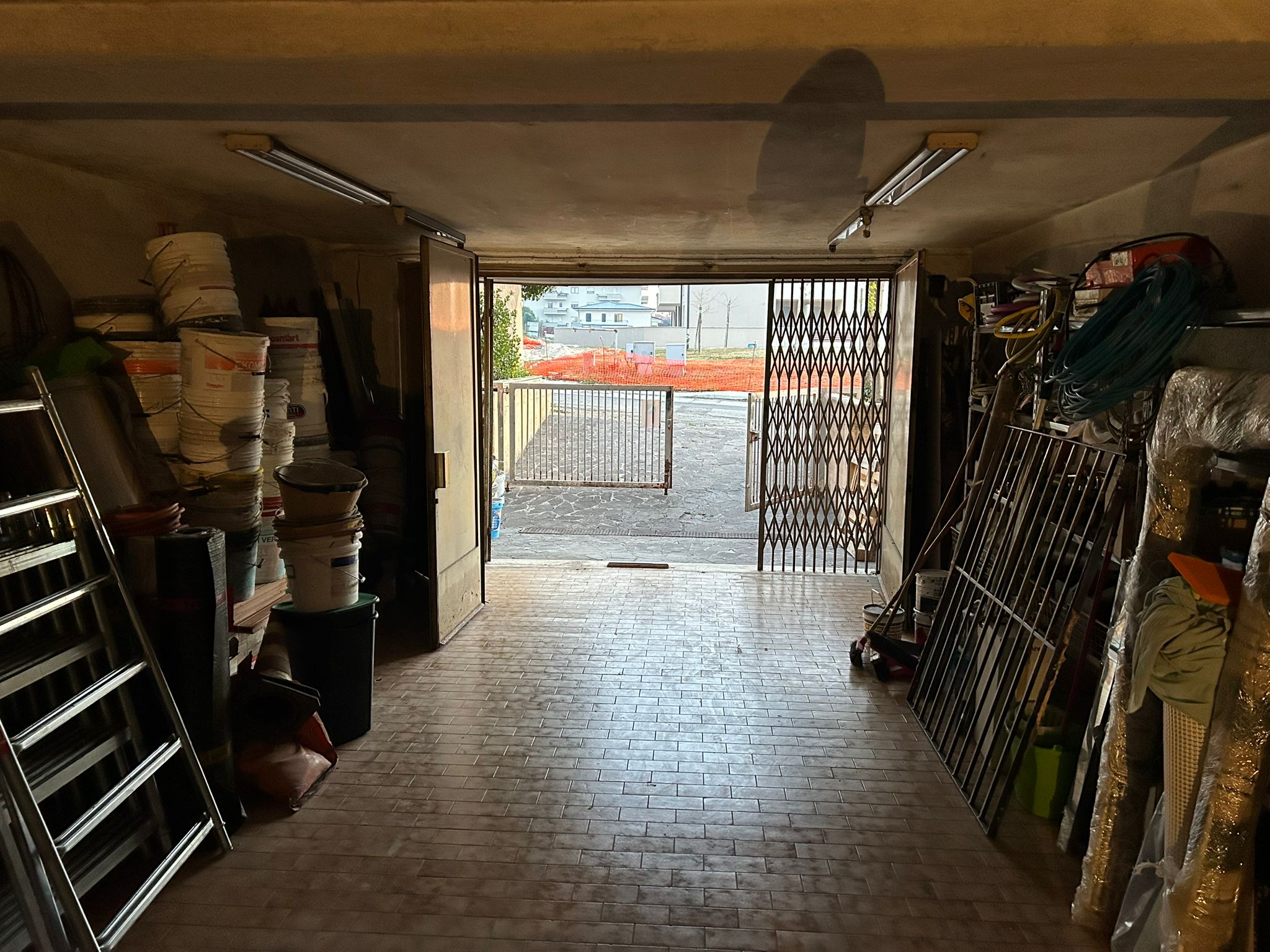
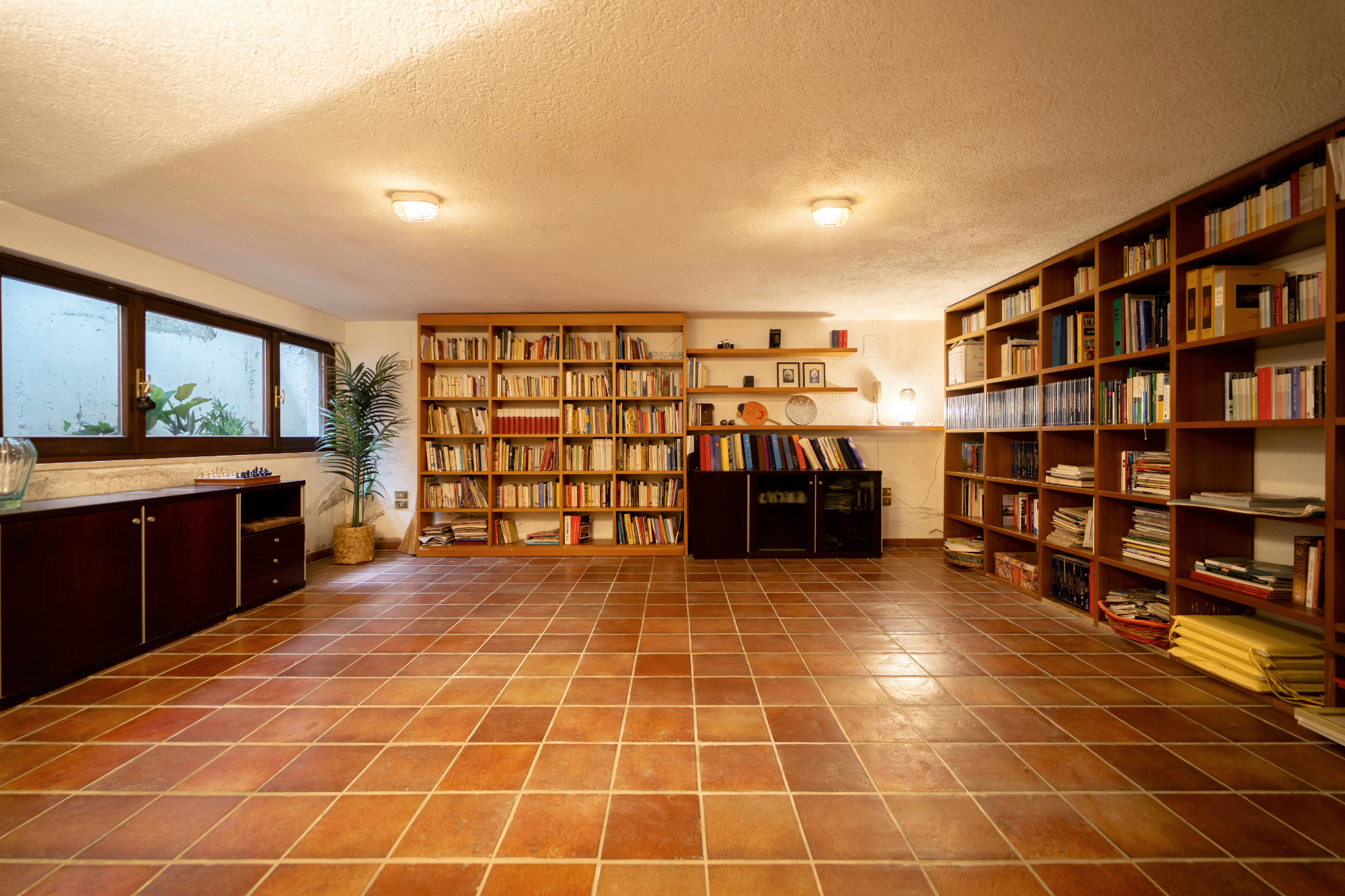
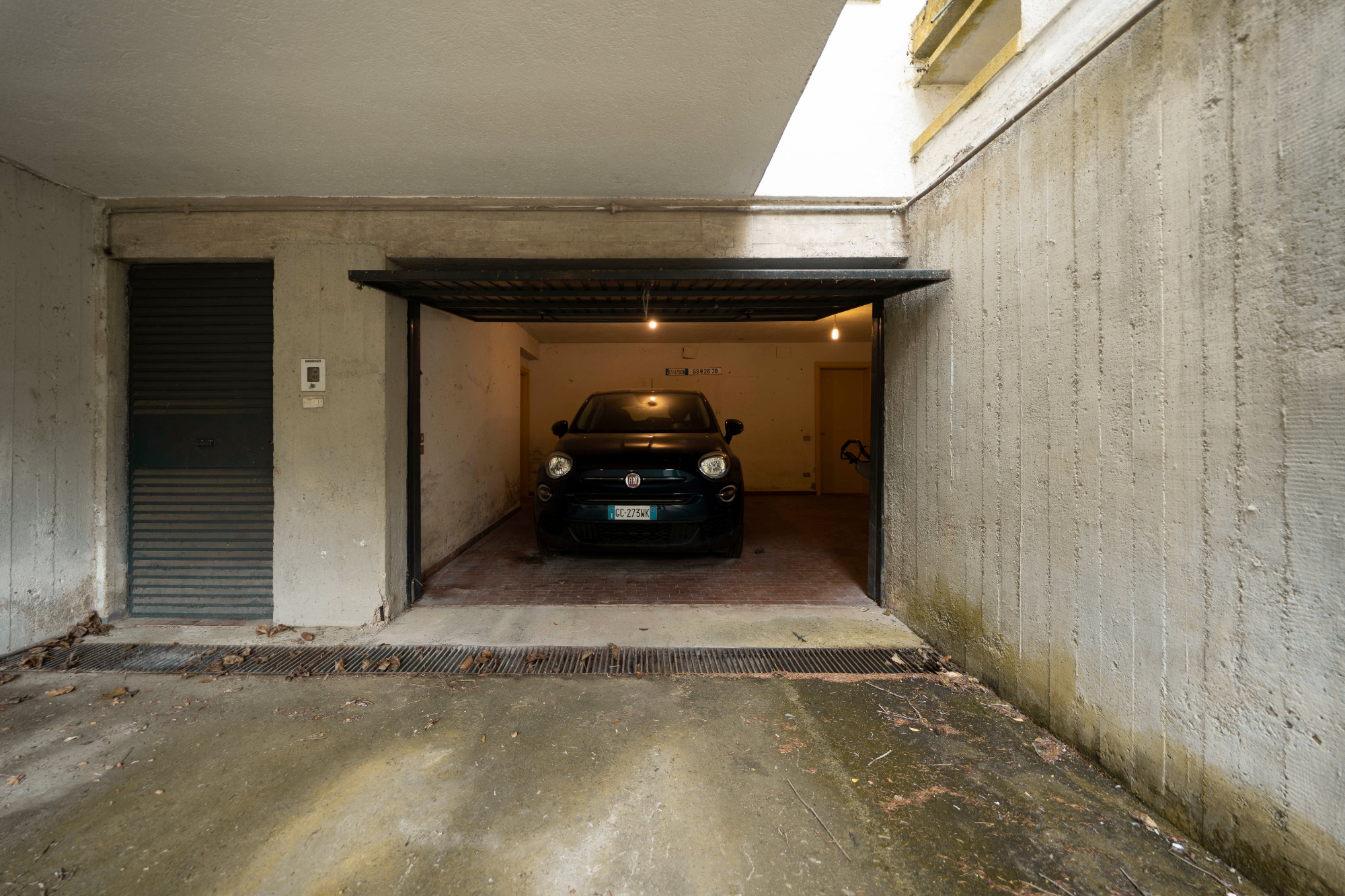
Descending to the basement level reveals another space of about 30 sqm, naturally lit by a large window well designed to be integrated with vegetation. This area is perfect as a hobby room, playroom, or a second living room for children. On the same level, there is a spacious garage of approximately 35 sqm, a laundry room, a storage room, and a technical room of about 20 sqm. The garage is accessed via a striking curved ramp that embraces the house, following its organic design.
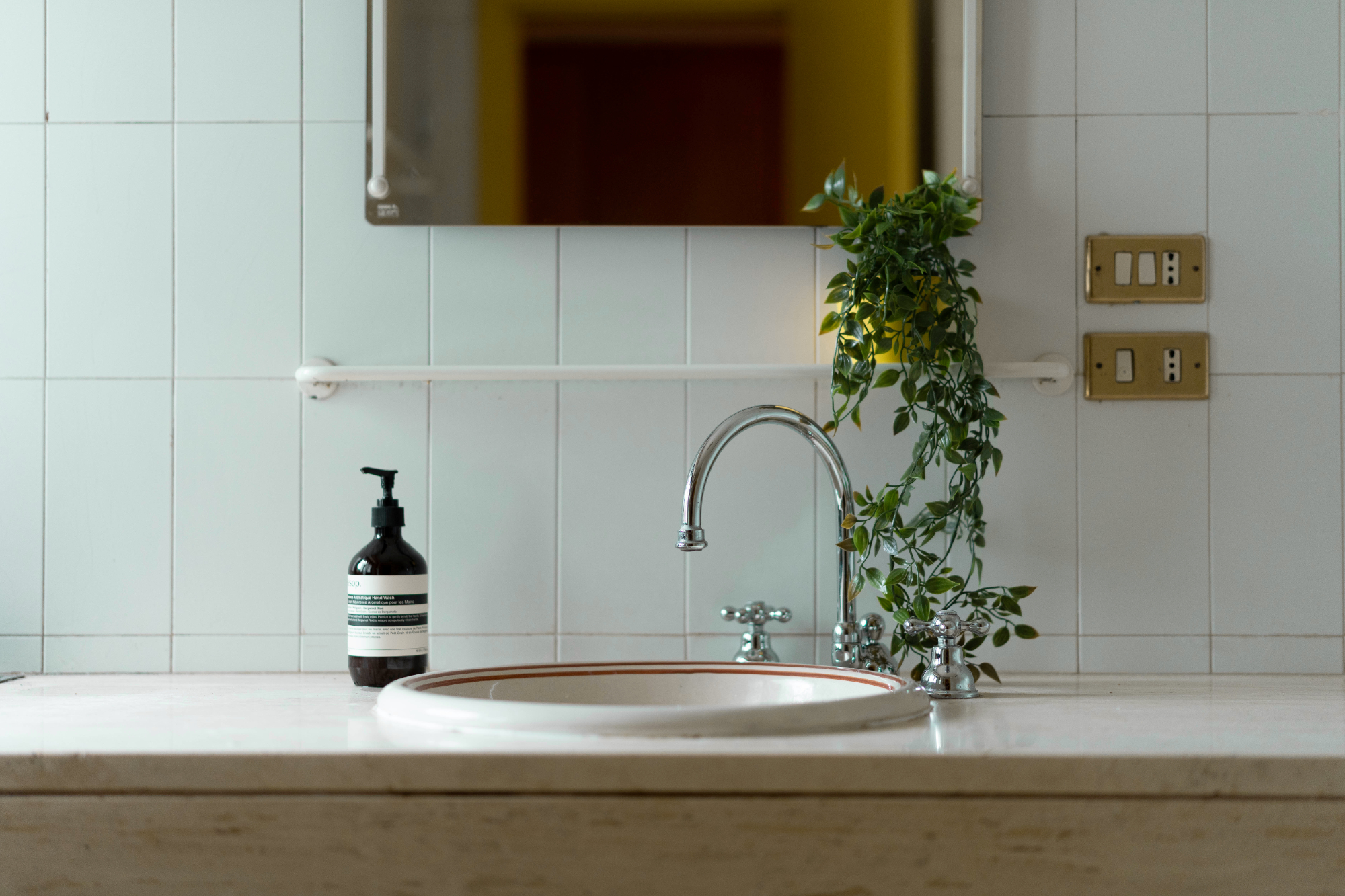
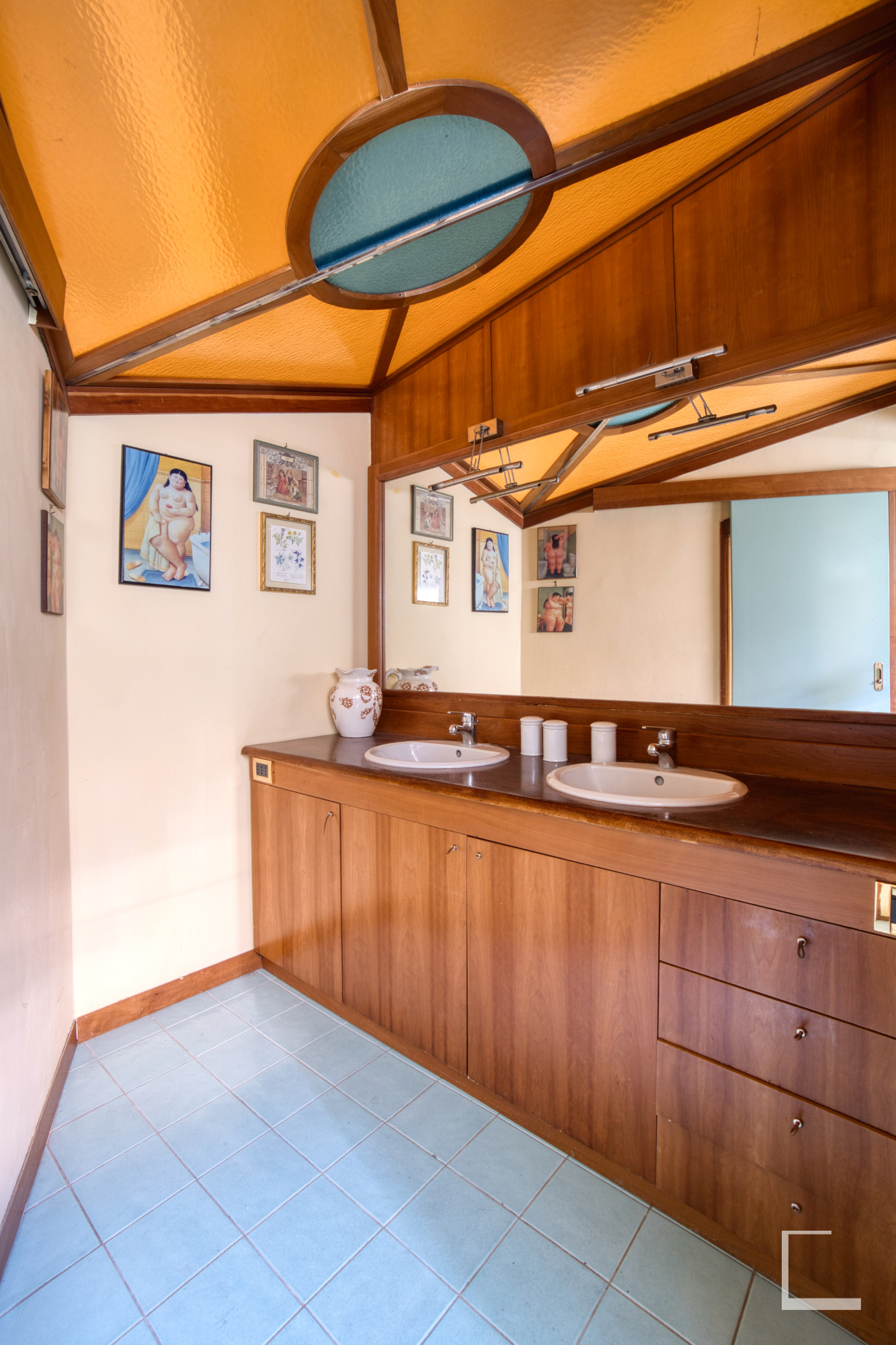
The materials were chosen with extraordinary coherence and sensitivity. The raw white plaster, used both indoors and outdoors, reinforces the idea of continuity between architecture and landscape, between interior and exterior spaces. Wooden floors warm the main living areas, while Brunelleschi terracotta tiles define the kitchen, attic, and basement tavern. In the bathrooms, white ceramic tiles with yellow accents introduce the guiding color of the entire house: yellow reappears in the doors and baseboards as a refined common thread design element. The window frames are wooden with shatterproof glass, while reinforced concrete structural elements traverse the house as serving bodies, openly declaring their function.
The building alternates between moments where it anchors itself to the ground and others where it seems to gently lift from it, almost as if to preserve the true heart of the composition: the garden.
More than just a simple dwelling, this villa is a rare, intense, and profoundly human architectural experience. A home capable of evoking emotion every day through light, silence, proportions, and its continuous dialogue with nature.
Today, it awaits a new guardian: someone capable of understanding its value, inhabiting its spaces with sensitivity, and continuing the story of a place designed to be lived with authenticity, freedom, and wonder.
Nestled in a lush hillside setting overlooking Perugia and Corciano, Monte Malbe offers the perfect blend of absolute privacy and immediate proximity to essential urban amenities. This exclusive hilltop boasts a rare and rejuvenating atmosphere, where the daily rhythm aligns with the tranquility of dense oak and holm oak forests, offering panoramic views of rare beauty. The local lifestyle evokes a timeless elegance, enriched by the historic presence of the Eremo dei Cappuccini and its proximity to Perugia's medieval masterpieces, such as the Fontana Maggiore. Living here means experiencing the authentic spirit of Umbria, participating in internationally renowned cultural events like Umbria Jazz or the evocative historical reenactments in nearby villages. It is an elite destination for those seeking a prestigious residence, enveloped in the silence of nature yet perfectly connected to the region's vibrant heart.
Gli anni Settanta rappresentarono per Perugia una fase di intensa crescita demografica ed espansione urbana, caratterizzata dalla necessità di realizzare nuovi quartieri residenziali e poli di servizi — come San Sisto, Elce e le aree ai piedi dell’acropoli — oltre a dotare la città di infrastrutture moderne e centri multifunzionali. In questo contesto, il sodalizio tra Vagni e Vergoni si affermò come un importante punto di riferimento sia per la committenza privata sia per quella pubblica.
Roberto Vergoni, figura di rilievo della cultura architettonica locale, svolse anche un ruolo istituzionale di primo piano, arrivando a ricoprire la carica di Presidente dell’Ordine degli Architetti di Perugia. Il suo approccio progettuale era influenzato dalle correnti del tardo razionalismo italiano, caratterizzate da un rigoroso controllo geometrico, dall’uso di volumi puri e da una costante attenzione al rapporto tra architettura, società e contesto urbano.
Luciano Vagni, laureato al Politecnico di Torino nel 1970 e iscritto all’Ordine degli Ingegneri di Perugia dal 1971, apportò allo studio una solida competenza strutturale e infrastrutturale. Oltre all’attività di progettazione e calcolo per nuove costruzioni negli anni Settanta e Ottanta, divenne successivamente uno dei maggiori esperti umbri nel consolidamento degli edifici storici. Tra i suoi lavori più noti figurano gli interventi di restauro e le indagini archeologiche condotte sotto la Cattedrale di San Lorenzo a Perugia.
Lo studio operò a diverse scale progettuali, lasciando un’impronta riconoscibile nel territorio perugino.
Urbanistica e piani attuativi
Alla fine degli anni Settanta, l’Amministrazione Comunale di Perugia affidò a Roberto Vergoni la redazione di importanti varianti urbanistiche e piani particolareggiati, tra cui quello dell’area di Villa Pitignano, finalizzati all’insediamento di nuovi centri civici, mercati pubblici, scuole e complessi parrocchiali.
Edifici residenziali e complessi multifunzionali
Lo studio si distinse per la progettazione di edifici residenziali, direzionali e multifunzionali che cercavano di superare la banalità della speculazione edilizia diffusa in quegli anni. Le architetture firmate Vagni e Vergoni privilegiavano l’impiego del cemento armato a vista, spesso combinato con ampie superfici vetrate o con rivestimenti in laterizio tipici della tradizione umbra, reinterpretati però attraverso un linguaggio moderno e rigorosamente geometrico.
L’attività dello studio Vagni-Vergoni contribuì in modo significativo all’ingresso di Perugia nella modernità architettonica della seconda metà del Novecento, coniugando rigore tecnico, qualità progettuale e una visione urbanistica attenta all’evoluzione della città contemporanea.







.jpg)
.jpg)

.jpg)
.jpg)
.jpg)
.jpg)
.jpg)
.jpg)
.jpg)
.png)
.png)







.jpg)
.png)
.jpg)
.png)
.webp)
.webp)