Recommended listening when reading Spotify: Glass - Hania Rani
The contemporary market is undergoing a profound change in the profile of the high-level buyer. If square footage and location once exhausted the selection criteria, today a figure emerges that we could define architectural caretaker. These subjects are not only looking for shelter, but for a work that reflects a specific cultural identity, ready to take charge of its integrity over time. Who buys a work signed by masters like Ignazio Gardella o Luigi Caccia Dominioni knows that any future changes must dialogue with the pre-existing language.
This sensitivity transforms buying and selling into a Transfer of values, where the seller is actively looking for an interlocutor capable of not dispersing the character of the product. Conservation should not be understood as a museum limit, but as a adaptive capacity that respects the original proportions, materials and light. “Architecture is a fact of art, a phenomenon that arouses emotion, outside of construction problems” — Le Corbusier, Towards an architecture. It is precisely this emotion that the conscious buyer wishes to preserve, making the property resilient to the passing trends of interior design.
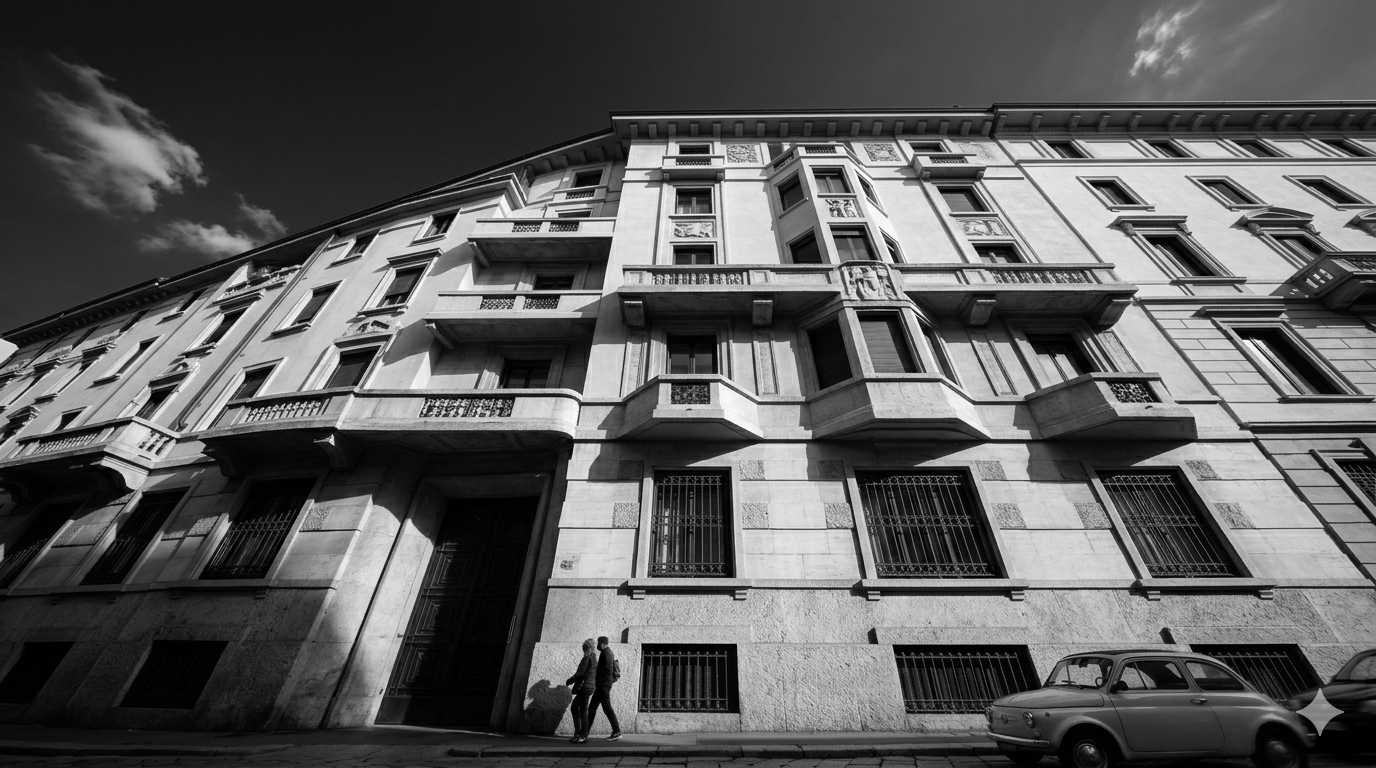
The economic value of these properties tends to show greater stability than the generic market. According to data from Knight Frank's Wealth Report 2024, assets that incorporate a component of historical or architectural design maintain a constant value premium (15% on average compared to similar unsold properties), since their scarcity is guaranteed by the unrepeatability of the project. La architectural signature acts as a guarantee seal that protects the investment from the wear and tear of aesthetic obsolescence, provided that the management of the property remains consistent.
Those who sell an architectural property today have the responsibility to select profiles that demonstrate a real housing culture. It is not uncommon for negotiations to move to plans that concern the philosophy of restoration or the intended use of certain original volumes. “The house must never be finished, it must always be in the making to follow the life of those who live there” — Gio Ponti, in a reflection on the flexibility of spaces that today is more current than ever. In this scenario, the Passing keys becomes a rite of trust between those who have loved a work and those who promise to make it shine in the new century.
Explore the collections of the MAXXI Architecture archive allows us to understand how fundamental private care has been for the survival of the modern Italian. Without the enlightened client and the subsequent custody of the owners, many masterpieces of the twentieth century would have been lost. The market is no longer just a place of monetary exchange, but an ecosystem where private protection guarantees the permanence of collective beauty.
Are we sure that the real ownership of a work of art does not lie, after all, in the daily commitment of those who choose to live in its rigor and light?
.png)